Travel Guide
Uluṟu-Kata Tjuṯa park pass, walks, and climb-closure guide
Use this guide if you are planning a first visit to Uluṟu-Kata Tjuṯa National Park and need to decide whether to buy the three-day pass, which walk fits your time and heat
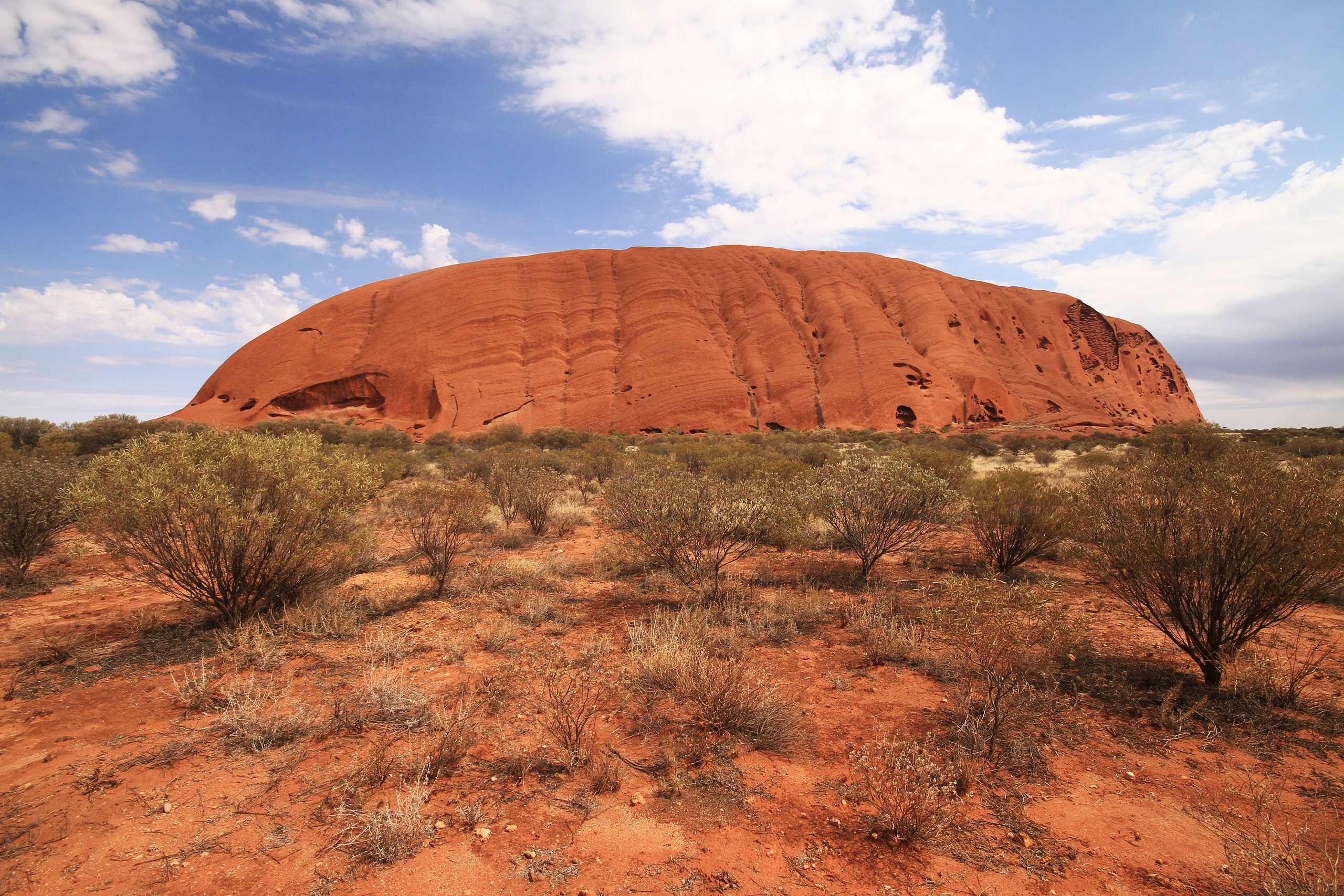
Use this guide if you are planning a first visit to Uluṟu-Kata Tjuṯa National Park and need to decide whether to buy the three-day pass, which walk fits your time and heat tolerance, and how to respect the permanent Uluṟu climb closure. The practical choice is not only "see Uluṟu at sunset"; it is how to sequence the pass, opening hours, walking distance, and cultural rules without arriving too late or choosing a route that is too exposed.
The most important constraint is desert timing. In July the park is open 6.30 am-7.30 pm, but hours change by month, and some tracks can close or become a poor choice in heat. Buy the pass before you arrive when possible, start longer walks early, and treat the climb closure as a rule and a cultural boundary, not as a viewpoint you can negotiate.
What to know first
- The adult park pass is AUD 38 for 3 days; children and teenagers under 18 enter free, and an adult annual pass is AUD 50.
- The pass is for Uluṟu-Kata Tjuṯa National Park only, not for Kakadu or Northern Territory Government parks.
- If you buy online, print the pass or save it to your phone, then scan the QR code in the left-hand lane at the entry station.
- Uluṟu is permanently closed to climbing from 26 October 2019, and attempts to climb breach the EPBC Act.
- The Uluṟu base walk is a 10.6 km Grade 3 loop that Parks Australia says takes about 3 hours 30 minutes.
- The Valley of the Winds at Kata Tjuṯa is a 7.4 km Grade 4 loop; it closes beyond Karu Lookout from 11 am when the forecast or actual temperature reaches 36 C or above.
- Yulara's Ayers Rock/Connellan Airport is the closest airport, while Alice Springs is 465 km by road, about 5.5 hours if driving directly.
Source: Public-domain image from Good Free Photos; use it as scene context and rely on the official Parks Australia links below for planning facts.
Decide whether the three-day pass is enough
For most independent visitors, the official three-day adult pass is the right baseline. It gives enough time to enter once for a first sunset or sunrise, return for an early Uluṟu walk, and still keep a separate Kata Tjuṯa morning without paying for an annual pass you will not use again. The annual pass becomes sensible only if you are staying longer, returning during the same year, or repeatedly driving in for photography, ranger activities, and shorter walks.
Do not treat the pass as a general Northern Territory parks pass. Parks Australia states that it is valid only for Uluṟu-Kata Tjuṯa National Park. Kakadu needs a separate Kakadu pass, and other Northern Territory parks use their own booking requirements. This distinction matters for road-trip travelers who are stringing together Uluṟu, Watarrka, Tjoritja, and Kakadu and assume one federal-looking ticket covers every stop.
The online pass is the smoother arrival choice. Save it to your phone or print it before you lose hotel Wi-Fi or mobile coverage, then use the left-hand lane at the entry station to scan the QR code. If online purchase fails, Parks Australia says you can still pick up a pass at the entry station, but that is a fallback rather than the fastest start. Commercial activities inside the park, media work, and visits to Aboriginal land outside the park may need additional permits.
Match the walk to your time, heat, and respect level
The Uluṟu base walk is the most complete way to understand the rock as a living landscape, but it is not a casual ten-minute viewpoint. Parks Australia lists it as a 10.6 km Grade 3 loop taking about 3 hours 30 minutes. Start from Mala carpark in the early morning, face the rock, and go clockwise. That sequence follows the official advice and keeps the longer, more exposed day from drifting into hot afternoon conditions.
If the full loop is too much, choose one Uluṟu section rather than forcing the circuit. The Mala walk is a 2 km Grade 2 return walk from Mala carpark to Kaṉtju Gorge and takes about 1 hour 30 minutes. It follows the same path as the ranger-guided Mala walk and many tours, so it works well for travelers who want cultural interpretation and a manageable distance.
The Kuniya walk to Muṯitjulu Waterhole is even shorter: 1 km return, Grade 2, about 30-45 minutes. It is one of the few permanent water sources around Uluṟu and is often a better choice for families, mixed-fitness groups, or travelers who have already spent the cool morning on another activity. It still requires respect: stay on marked paths, avoid treating cultural sites as props, and leave enough silence to experience the place.
Plan Kata Tjuṯa as its own morning
Kata Tjuṯa is not a quick add-on after a full Uluṟu base loop. Parks Australia notes that the 36 steep-sided domes lie 50 km by road from Uluṟu, and the two main walks ask for different levels of fitness. If your priority is a challenging walk and broad desert views, reserve a cool morning for Valley of the Winds. The full loop is 7.4 km, Grade 4, and takes about 4 hours.
The heat rule makes Valley of the Winds a planning decision, not only a scenery decision. The walk closes at the first lookout, Karu Lookout, from 11 am when the forecast or actual temperature reaches 36 C or above. That rule should shape your day before you leave Yulara. If the forecast is close to the threshold, arrive early, carry enough water, and be ready to stop at Karu Lookout rather than pushing toward Karingaṉa.
Waḻpa Gorge is the more contained Kata Tjuṯa option. It is a 2.6 km Grade 3 return walk taking about 1 hour. Parks Australia asks visitors to remain on marked tracks and not climb boulders or descend into gullies. For photography, it also asks that both sides of the gorge stay in frame to avoid revealing sacred places. That makes Waḻpa Gorge a strong option when you want Kata Tjuṯa presence without the Grade 4 exposure of Valley of the Winds.
Use opening hours as a hard edge, not a suggestion
The park is open every day, but it closes at night and all visitors must leave by closing time. Hours change across the year: January and February run 5.00 am-9.00 pm, March 5.30 am-8.30 pm, April 5.30 am-8.00 pm, May 6.00 am-7.30 pm, June and July 6.30 am-7.30 pm, August 6.00 am-7.30 pm, September 5.30 am-7.30 pm, October 5.00 am-8.00 pm, November 5.00 am-8.30 pm, and December 5.00 am-9.00 pm. The Cultural Centre is listed as open 7.00 am-5.45 pm daily.
These times do not mean every walk is a good idea at every hour. A sunrise entry can still be too late for a long summer walk if you linger at viewpoints and begin the track as the heat builds. For the base walk and Valley of the Winds, plan backward from finish time: be off the exposed sections before the day becomes punishing, and keep the final drive, photos, fuel, and dinner timing outside the park's closing edge.
If your visit depends on a specific ranger-guided activity, Cultural Centre stop, or sunset viewpoint, check the official pages again the day before. Ceremonial needs, weather, road conditions, and operational changes can affect access. A good Uluṟu plan leaves slack; a brittle plan tries to fit sunrise, the base loop, Kata Tjuṯa, the Cultural Centre, and sunset into one day and then fails at the first delay.
Respect the permanent climb closure
The Uluṟu climb closed permanently from 26 October 2019. Parks Australia explains that Uluṟu has been sacred to Aṉangu for tens of thousands of years and that climbing was not generally permitted under Tjukurpa, Aṉangu law and Culture. The closure is also now enforceable: visitors attempting to climb breach the Environment Protection and Biodiversity Conservation Act and can be penalized.
This is not a symbolic note buried in the background. It changes the visit decision. Travelers who once expected a summit view should redirect that energy into the base walk, Mala walk, Kuniya walk, Cultural Centre, ranger-guided activities, and legal sunrise or sunset viewing areas. The best experience comes from proximity, listening, and staying on the track, not from trying to stand above a place that the Traditional Owners have asked visitors not to climb.
Respect also extends to images. Several areas around Uluṟu and Kata Tjuṯa have culturally sensitive photography guidance. On Valley of the Winds, Parks Australia asks visitors not to take video or photographs of Kata Tjuṯa's rock formations, while Waḻpa Gorge guidance asks photographers to keep both sides of the gorge in frame. Treat these as part of the route instructions, not as optional etiquette.
Choose the transport shape before you buy anything else
Flying into Ayers Rock/Connellan Airport at Yulara is the simplest access pattern. Parks Australia lists direct flights from Sydney, Melbourne, Brisbane, and Cairns, with approximate flight times between 2 hours 40 minutes and 3 hours 15 minutes depending on the city. If you arrive from overseas or another Australian city, you will probably connect through one of those airports.
Driving from Alice Springs is possible but should be planned as a real outback drive. Parks Australia gives Uluṟu as 465 km from Alice Springs by road and about 5.5 hours if driving directly. That estimate does not include grocery stops, fuel, photos, wildlife caution, rest breaks, or driving at times you would rather avoid. If you hire a car in Yulara, the official guidance says rental cars are limited and should be booked a few weeks ahead.
If you do not want to drive, use an organized tour or shuttle-style operator and check exactly what is included. Some tours cover sunrise, sunset, Kata Tjuṯa, and the Cultural Centre; others only transfer you to one viewpoint. The pass, walking distances, and heat closure rules still matter even when someone else is driving, because your body is still doing the walk and your itinerary still has to obey park hours.
Common mistakes that weaken the visit
The first mistake is buying the pass too late or assuming one pass covers Kakadu and every Northern Territory park. The second is treating the Uluṟu base walk as a small loop because it appears close on a map. A 10.6 km desert loop needs shoes, water, sun protection, and a start time that leaves room for slower walkers.
The third mistake is squeezing Kata Tjuṯa after an already long Uluṟu morning. Valley of the Winds deserves its own early start, and Waḻpa Gorge deserves enough quiet time to stay on track and observe the photography guidance. The fourth mistake is ignoring the 36 C heat rule until you are already at Karu Lookout and disappointed by the closure.
The fifth mistake is framing the climb closure as a lost attraction. That mindset misses the point of the park. The closure is a central planning fact and a cultural instruction. When you shift from "how do I get on top?" to "which legal route lets me understand the place better?", the pass, walk choice, and timing all become clearer.
Who should choose which plan
Choose a three-day independent plan if you have your own car, moderate fitness, and want to split Uluṟu and Kata Tjuṯa into separate mornings. Day one can be arrival, pass scan, Cultural Centre, and sunset. Day two can be the early base walk or Mala plus Kuniya. Day three can be Valley of the Winds or Waḻpa Gorge, depending on weather and legs.
Choose a shorter Uluṟu-focused plan if you have one full day, children, mobility limits, or a group with mixed heat tolerance. In that case, do not chase every headline. Pair Mala walk or Kuniya walk with the Cultural Centre and a legal sunrise or sunset viewpoint. You will still make a coherent visit without forcing the full base loop.
Choose an organized tour if you do not want to manage airport transfers, road distances, or early starts. The better tour is the one that clearly states route, pass handling, start time, walking distance, water expectations, and what happens if heat or access rules change the walk. Ask those questions before paying, because the official park rules apply no matter how polished the brochure looks.
What to check before you go
Recheck the pass page for AUD 38 adult three-day pass pricing, under-18 free entry, annual pass terms, QR scanning instructions, and additional permit notes. Recheck opening hours for your month, especially if you are timing a sunrise entry or a sunset exit. Recheck the walk pages for distance, grade, drinking-water notes, photography guidance, and heat closure language.
Also check your transport details: flight arrival time, rental-car pickup hours, fuel plan, and the 465 km Alice Springs driving leg if that is your route. Pack for the decision you actually made. A traveler doing Kuniya walk needs less time than a traveler doing the base loop, but both need water, sun protection, respect for marked tracks, and enough flexibility to stop when weather or cultural guidance asks them to stop.
Finally, keep the climb closure in the front of the plan. Since 26 October 2019, the legal and respectful answer is simple: do not climb Uluṟu. Build the trip around the pass, walks, Cultural Centre, and official viewing areas, and the visit becomes calmer, clearer, and much easier to defend when conditions change.
Sources
- Parks Australia: Buy your Uluṟu-Kata Tjuṯa park pass
- Parks Australia: Opening hours
- Parks Australia: Uluṟu base walk
- Parks Australia: Mala walk
- Parks Australia: Kuniya walk and Muṯitjulu Waterhole
- Parks Australia: Valley of the Winds walks
- Parks Australia: Waḻpa Gorge walk
- Parks Australia: Getting here
- Parks Australia: Uluṟu climb closure