Seoraksan Cable Car, Trail Choice, and Seasonal Visit Guide
This guide is for travelers starting from Seoul or Sokcho who plan a day trip or one-night stay at Seoraksan National Park.
ByMomentBook Editorial·Published·Updated
This guide is for travelers starting from Seoul or Sokcho who plan a day trip or one-night stay at Seoraksan National Park. It helps you decide whether to take the cable car up to Gwongeumseong, hike to Ulsanbawi or Biryong Falls, and understand how conditions change during peak foliage season and winter.
Seoraksan is Korea's third-oldest national park, packing granite ridges, deep valleys, and alpine vegetation into the eastern edge of the Korean Peninsula. But most visitors cluster around the Seorak-dong entrance, the cable car sells same-day on-site tickets only, and each trail has its own entry cutoff time. Parking lots close before mid-morning during autumn, and some high-elevation trails shut down in winter. Know what to decide first so you don't burn a day.
What to know first
Seoraksan has multiple entrances, but the practical hub for first-timers and day-trippers is the Seorak-dong entrance near Sokcho. The cable car, Ulsanbawi, Biryong Falls, and Geumganggul trails all start here.
The Seorak Cable Car does not take reservations and sells same-day walk-up tickets only. Fares are ₩16,000 round-trip for adults, ₩12,000 for children (36 months to elementary school), and free for infants under 36 months. During the 2026 peak periods (Jul 18–Aug 23 and Sep 19–Nov 15), the senior discount is not available.
Only round-trip tickets are sold; one-way rides are not possible. Cancel by 10 minutes before boarding for a full refund; after that, 20% is deducted. Unused tickets are fully refunded if operations stop due to strong wind or severe weather.
The cultural property area entry fee and the cable car fare are separate. The Small Park (Sogongwon) area up to the trailheads is free, but entry into the cultural property zone (toward Ulsanbawi and Biryong Falls) requires a small ticket. Check the current fee at the entrance.
Seoraksan enforces a mountain entry time system by trail. After the designated cutoff, you cannot start a hike. Cutoff times change by season. Check the current status and entry deadlines on the KNPS website (knps.or.kr) before you go.
During fall foliage season (mid-to-late October), the Seorak-dong parking lot fills before 8 a.m. On those days, take city bus 7 or 7-1 from Sokcho to the park entrance, or leave early enough to beat the lot closure.
From Sokcho, city buses 7 and 7-1 run roughly every 30 minutes to the Seoraksan Small Park entrance, taking about 30 minutes. From Seoul, express buses to Sokcho depart frequently from Dong Seoul Terminal and Gangnam Express Bus Terminal; the ride takes about 2.5 to 3 hours.
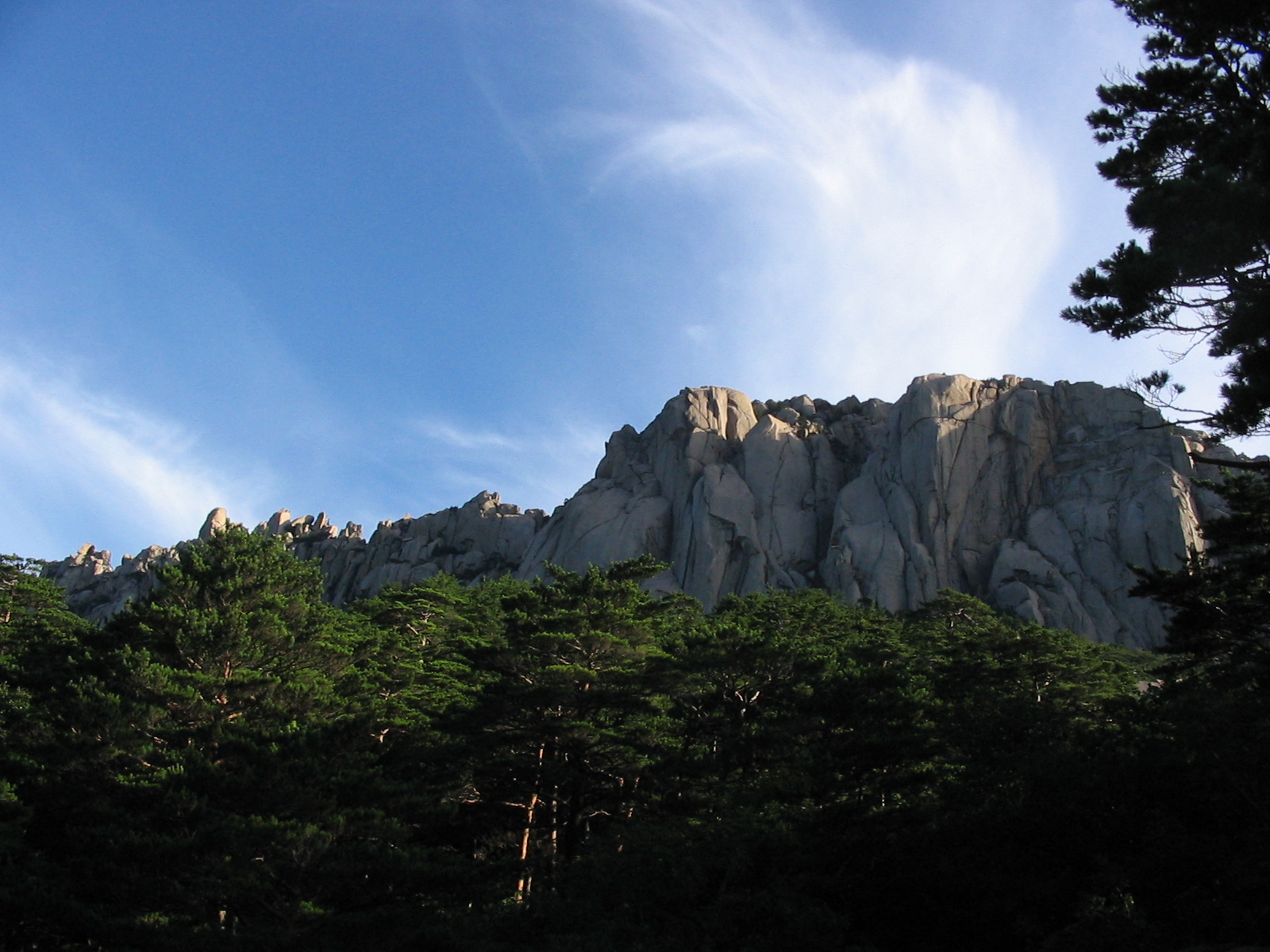
Ulsanbawi rock formation at Seoraksan with autumn foliage, towering granite peaks rising above the valley
Source: Wikimedia Commons, Ulsanbawi view at Seoraksan.
Choose between the cable car and the trails
The cable car (Gwongeumseong course) suits visitors who want dramatic ridge views without a strenuous climb. Buy your ticket at the ground-floor counter, then head to the second-floor boarding area. A 50-passenger cable car covers about 1.1 km to Gwongeumseong station at 699 m above sea level. From the top, a short walking path leads to rock viewpoints. During peak season and weekends, wait times can exceed one hour, so arrive early.
The Ulsanbawi course is a roughly 3.8 km round-trip hike taking 2 to 3 hours. It rewards you with Seoraksan's most iconic rock-pinnacle panorama. The route includes steep stairs and sharp inclines; hiking boots are strongly recommended over sneakers. Past Heundeulbawi (the rocking boulder), the final section opens up to views of the East Sea and downtown Sokcho.
The Biryong Falls course is a gentler 2.4 km round-trip valley trail taking about 1.5 to 2 hours. It suits beginners and families with children. The path follows the sound of running water through forested terrain. Above the falls, an advanced extension continues to the Towangseong Falls observatory for those with extra stamina and time.
The Geumganggul course is a short add-on near the cable car boarding area that climbs to a cave shrine set into the cliff face. Do it while you wait for your cable car time slot.
Full-day hikers can tackle the Daecheongbong courses (via Osaek, Baekdam, Hangyeryeong, or Seorak-dong) or the Gongnyong Ridge (Dinosaur Ridge) traverse. These demand proper overnight planning, not a casual day trip.
How the seasons change your visit
Spring (March–May): Lower elevations start greening in April, while snow lingers above 1,200 m into May. The cable car runs year-round, and spring wait times tend to be short. March days can still dip below freezing, so bring a windbreaker.
Summer (June–August): The monsoon arrives by mid-July with heat and humidity. The cable car runs in rain but stops for strong wind or lightning. The valley trails (Biryong Falls) are popular in summer; watch for slippery rocks near the water. The senior discount is unavailable during the summer peak period (Jul 18–Aug 23).
Autumn (September–November): Seoraksan's fall color begins at high elevations in late September and peaks at lower elevations in mid-to-late October. This is the busiest season. Cable car wait times can stretch past two hours. Parking lots close by mid-morning, so public transport is strongly advised. The autumn peak window (Sep 19–Nov 15) removes the senior discount.
Winter (December–February): Seoraksan's snow-covered peaks are stunning, but some high-elevation trails close for safety. The cable car operates when weather permits, and winter wait times are negligible. Temperatures often drop below –10°C, so pack microspikes and full winter layers. Mountain entry hours are shorter; begin your descent by 2–3 p.m.
Mountain entry times and trail controls
Seoraksan sets per-trail entry cutoff times. Many trails close to new entrants by 4–5 p.m. in summer and 2–3 p.m. in winter. The exact times are posted on the Seoraksan page of the KNPS website (knps.or.kr) under the mountain entry time system and trail control notices. Seasons and weather change these numbers, so check the same day.
Night hiking is not permitted. Exceeding the designated entry window can result in a fine. Long-distance routes such as Daecheongbong or Gongnyong Ridge demand a very early morning start.
Camping, cooking, and smoking are prohibited outside designated areas within the national park. Pack out all trash.
Common mistakes
Assuming you can reserve the cable car online. Seorak Cable Car sells walk-up tickets only; no official reservation channel exists.
Thinking the cable car fare covers the national park entry fee. They are separate.
Driving to the park after 9 a.m. on a fall-foliage weekend. The parking lot will already be closed, and vehicle access may be restricted.
Starting a hike in the afternoon during winter without checking the entry cutoff. You risk not making it down before sunset.
Attempting the Ulsanbawi course in sneakers. The steep stairs and rock surfaces are genuinely slippery, even in dry weather.
Who should choose which option
Choose the cable car if you have limited time (2–3 hours), low hiking fitness, young children or elderly companions, or photography as your main goal.
Choose Ulsanbawi if you can handle a 2–3 hour mountain hike, want the iconic rock-peak view up close, or need an alternative when cable car queues are too long.
Choose Biryong Falls if you are a beginner hiker, visiting with small children, or want a shaded valley walk during hot summer months.
Choose a full-day summit course only if you are an experienced hiker with 6+ hours of trail capacity. Plan an overnight stay in Sokcho or near the park.
What to check before you go
Confirm current trail closures and entry cutoff times on the KNPS Seoraksan page (knps.or.kr)
Check the Seorak Cable Car website (sorakcablecar.co.kr) for same-day operational status
Verify Sokcho-bound express bus schedules and seat availability via the TxBus or Kobus app
For fall foliage visits (October), plan to use public transport or arrive before 7 a.m.
Pack hiking boots, enough water, a windbreaker, and winter microspikes and insulation when visiting December–February
Confirm whether your planned food stops and kiosks accept cards; some park vendors may be cash-only
Sources
Korea National Park Service — Seoraksan National Park: https://www.knps.or.kr/front/portal/visit/visitCourseSubMain.do?parkId=120400&menuNo=7020093 (trail info, trail control notices, mountain entry time system)
Seorak Cable Car official website: https://www.sorakcablecar.co.kr (fares, boarding guide, operating rules, refund policy)
Korea Tourism Organization — VISITKOREA: https://english.visitkorea.or.kr (Seoraksan overview and transport guidance)