Home/Editorial Guides/Rwanda Gorilla Trekking Permit Guide 2026: Age Rule, Kinigi Start, and What to Pack
Travel Guide
Rwanda Gorilla Trekking Permit Guide 2026: Age Rule, Kinigi Start, and What to Pack
Rwanda gorilla trekking is not a turn-up-and-buy activity. The practical plan starts with a permit, an age check, and a very early morning at Volcanoes National Park headquarters in Kinigi.
ByMomentBook Editorial·Published·Updated
Rwanda gorilla trekking is not a turn-up-and-buy activity. The practical plan starts with a permit, an age check, and a very early morning at Volcanoes National Park headquarters in Kinigi.
The official Visit Rwanda and Rwanda Development Board booking pages make the main constraints clear: permits are limited, the standard foreign visitor permit is expensive, children under 15 are not eligible, and the actual forest time depends on where the gorilla family is that morning. This guide keeps the moving parts in one place before you book hotels or transport.
What to know first
Volcanoes National Park gorilla trekking begins from the park headquarters in Kinigi at 07:00.
Visit Rwanda says 12 fully habituated gorilla families are open for visits, with eight permits per family, so the daily maximum is 96 permits.
The RDB booking portal lists a minimum age of 15 years for mountain gorilla tracking.
Visit Rwanda and the RDB portal list the standard foreign visitor permit at USD 1,500.
The portal also shows lower resident or citizen categories, but those require the correct supporting documents; it warns that applications with wrong documents are denied.
The trek can take about one to four hours before the group reaches the gorillas, depending on the family location and terrain.
Once with the gorillas, the visit is limited to one hour.
Visit Rwanda recommends booking the permit before confirming accommodation because permits are limited.
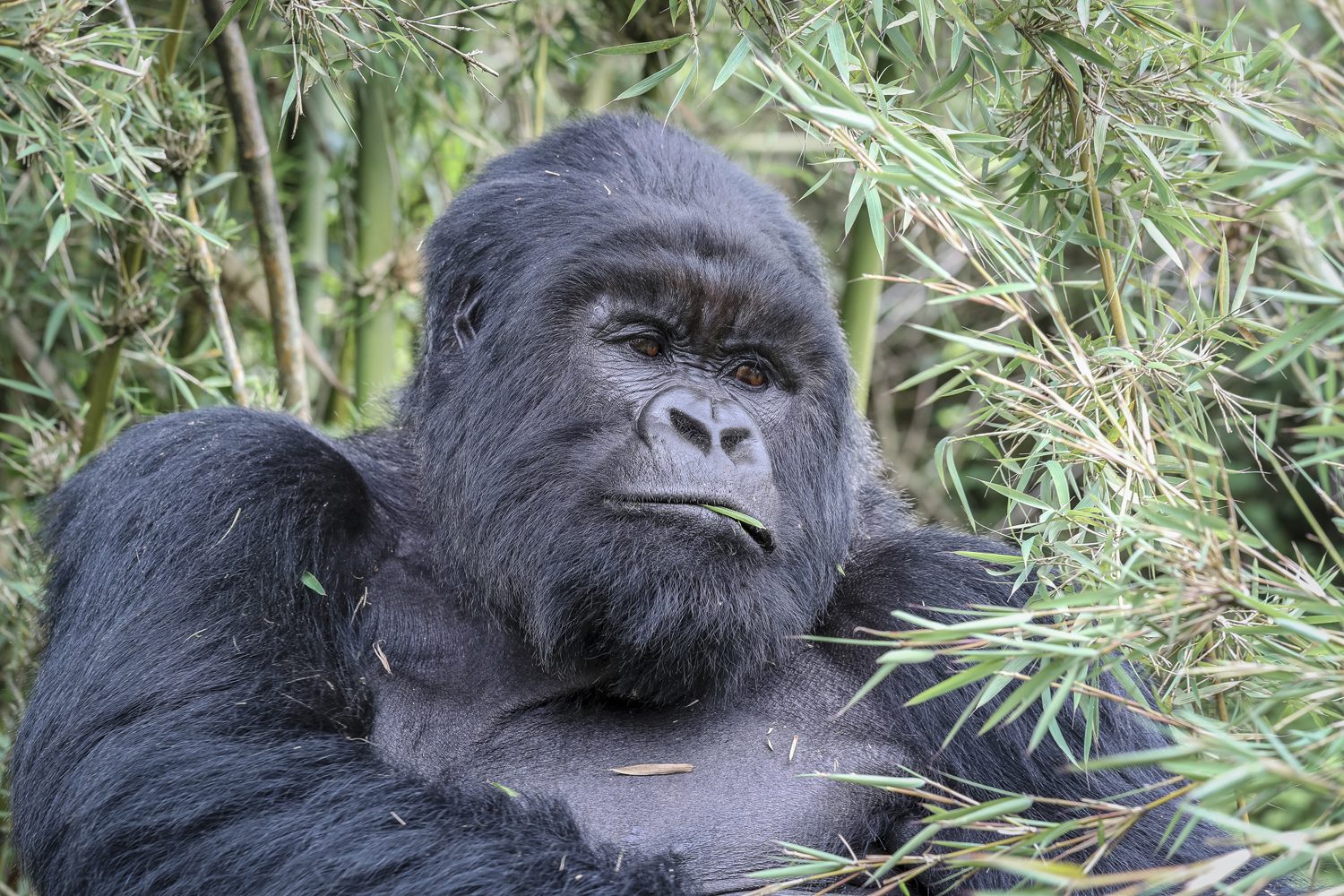
A silverback mountain gorilla among bamboo in Rwanda's Volcanoes National Park
*Image source: Visit Rwanda / Rwanda Development Board*
Book the permit before you build the rest of the trip
For this trip, the permit is the hard constraint. Visit Rwanda describes direct booking through the official RDB route and also notes that selected tour operators can help. Either way, do not treat the permit as a small add-on after flights and lodges are fixed.
The reason is simple. The official tourism page says eight permits are available for each of 12 fully habituated families, giving a maximum of 96 gorilla permits per day. That is a small daily supply for one of Rwanda's best-known wildlife experiences. If your travel dates are fixed, confirm permit availability before locking in nights around Musanze or Kinigi.
Check the age and document rules before paying
The RDB booking portal lists the minimum age for mountain gorilla tracking as 15 years. That rule matters before a family trip is planned, because a younger child cannot simply join on the day.
Price categories also need care. The official pages list USD 1,500 as the standard foreign visitor permit. The portal shows lower resident or citizen categories, but those are not casual discounts. They depend on the right residency, citizenship, or regional documents, and the portal warns that applications made with wrong documents will be denied. If you are not sure which category fits, use the official booking page or a licensed operator before payment rather than guessing.
Plan the Kinigi morning like a fixed appointment
The Visit Rwanda gorilla tracking page says trekkers gather at the park headquarters in Kinigi at 07:00. That is the real start time to plan around, not the moment you hope to begin walking in the forest.
Most visitors stay around Musanze, Kinigi, or a nearby lodge the night before so the morning does not depend on a long drive. Build in enough time for the briefing, ranger assignment, permit checks, and the drive or walk to the trailhead. This is not the day to cut breakfast, checkout, or road timing too close.
The trek length is variable, but the gorilla time is not
Visit Rwanda gives a realistic trekking range of one to four hours. That range exists because the gorillas are wild animals moving through mountain forest, not a fixed viewpoint. Rain, mud, altitude, and the location of the assigned family can all change the effort required.
The one fixed limit is the time with the gorillas: one hour. Plan your camera and battery setup before the encounter, listen to the ranger instructions, and avoid spending the first minutes rearranging gear. The experience is short, structured, and closely managed for conservation reasons.
Pack for wet forest, not for a viewpoint
Visit Rwanda's packing advice is practical: waterproof hiking shoes or boots, long trousers, a long-sleeved shirt, a rain jacket, and gardening gloves or gaiters. Those items are not decorative. They help with mud, nettles, bamboo, rain, and uneven forest ground.
A small daypack should also leave space for water, simple snacks if your operator allows them, a charged phone or camera, and a protective cover for electronics. Porters can be hired locally, and hiring one is useful if you are carrying camera gear, if the trail is muddy, or if you want extra help on steeper sections.