Paro Taktsang Hike Guide: SDF, Certified Guide, and Trail Timing
This guide is for travelers adding Paro Taktsang, the cliffside Tiger's Nest Monastery, to a first Bhutan itinerary.
ByMomentBook Editorial·Published
This guide is for travelers adding Paro Taktsang, the cliffside Tiger's Nest Monastery, to a first Bhutan itinerary. The real decision is not only whether you can walk the trail; it is how to align the hike with the visa, Sustainable Development Fee, certified guide, transport, altitude, and sacred-site rules before your dates are locked.
Treat Taktsang as a planned Bhutan day, not a casual independent hike from Paro. Official tourism guidance says most visitors need a visa before travel, all treks need an accredited guide or operator, and guides are required for monument visits, so the smoothest trip is built around confirmed paperwork, a DOT-certified guide, a vehicle plan, and a weather check.
What to know first
Most visitors need a Bhutan visa before travelling; Indian visitors use a permit route, while Bangladesh and Maldives visitors follow a separate visa process.
The current official SDF reference is USD 100 per adult night for visitors other than Indian nationals, with child concessions and separate Nu./INR rates for Indian nationals.
A correctly completed visa application can take up to five working days, so do not make Taktsang your first fixed booking before the visa window is clear.
Bhutan can be booked independently, but official FAQ guidance still says a guide is mandatory at all times and all treks must use an accredited guide or operator.
The official Taktsang hiking note describes a steady two-hour climb to about 10,000 feet, beginning roughly six miles from Paro, with about 3,000 feet of elevation gain from Paro.
Religious-site visits need respectful clothing that covers shoulders to knees, and some monuments collect fees on arrival by cash or goBoB.
From June to September, monsoon disruption and landslide risk can affect transport, so reconfirm the trail day with your guide.
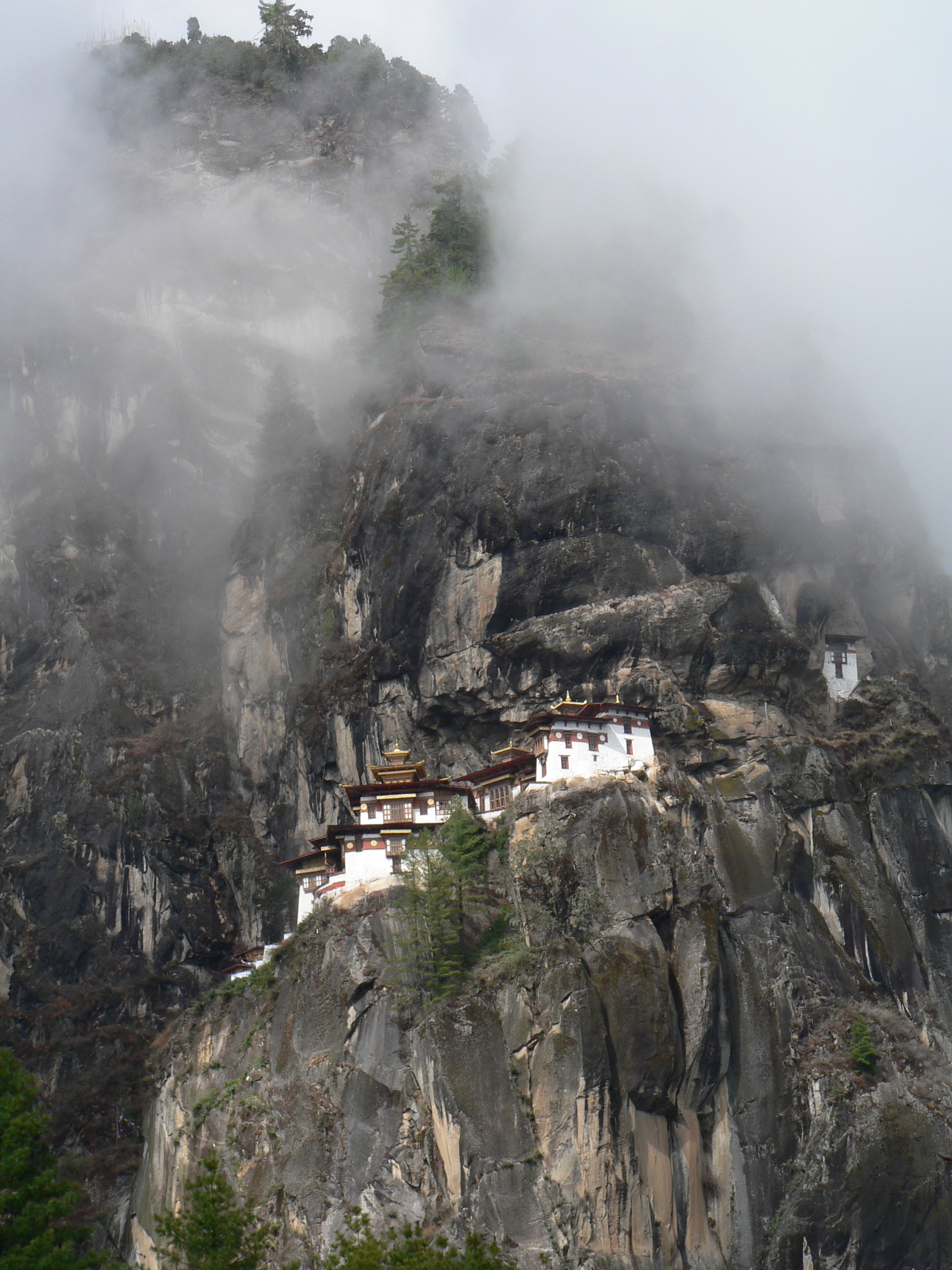
Paro Taktsang monastery on a misty cliff above the Paro Valley
Source: Wikimedia Commons photo by Stephen Shephard, used via the file page linked in Sources.
Decide if Taktsang belongs at the start or end of your Bhutan trip
Put Taktsang on a day when your paperwork, guide, and transport are already settled. If you land in Paro and want to hike immediately, remember that the airport does not have public transport and the official FAQ points travelers to taxis, hotel transfers, tour operators, or arranged drivers. A same-day arrival hike is usually the least forgiving plan because a delayed flight, missing guide, or slow permit issue can compress the climb.
For a short Paro and Thimphu trip, the safer pattern is to arrive, sleep in Paro, and hike the next morning. Paro is already high, and the official Taktsang description places the monastery route at a much higher level than town, so a rested start matters. If you have several Bhutan nights, schedule the hike after your first night but before long road transfers that could be affected by weather.
Keep the last day flexible. Taktsang is close enough to Paro to feel like a final highlight, but final-day hiking creates a problem if rain, landslide disruption, illness, or a missed start pushes you toward a flight deadline. Choose a late-trip Taktsang day only when your departure is the following day and your guide has a backup plan.
Budget the visa, SDF, and site costs before you lock dates
The SDF is charged by night, so the hike is part of your overall Bhutan date decision. The official visa page says most visitors pay the SDF during the visa process, and the FAQ currently lists USD 100 per adult night for non-Indian visitors, USD 50 for children aged six to under twelve, and no SDF for younger children. Indian nationals have separate Nu./INR rates, and India, Bangladesh, and Maldives visitors have different permit or visa handling.
Do the budget before choosing flights. Add the USD 40 visa application fee where it applies, the SDF nights, guide and vehicle costs, and any monument or museum fees your itinerary includes. The FAQ notes that most monuments are free but some are chargeable, some fees are paid on arrival, and most monuments are open from 9am to 5pm; this is exactly the sort of detail to confirm with your guide before you decide whether Taktsang shares a day with another site.
If your dates change, do not assume the SDF follows automatically. The FAQ explains that extensions and refunds have their own process, and a changed visa application can require reapplying. For Taktsang planning, the practical point is simple: choose nights first, then place the hike inside nights you are sure you will use.
Book the right guide and transport setup
The key booking decision is who is responsible for the day. Bhutan's official FAQ says all treks must be undertaken with an accredited tour operator or guide, and it also says a guide is mandatory at all times. It no longer requires a route permit for ordinary travel around the country when you are accompanied by a Department of Tourism-certified guide, but that does not remove the guide requirement.
Use the Bhutan Tourism Services Portal or your hotel to identify a certified guide, operator, accommodation, or driver. Ask one person to own the full Taktsang day: pickup time, trailhead arrival, lunch or cafe stop, pony expectations for younger travelers if relevant, site fee/payment checks, clothing reminder, and return transport. Splitting those responsibilities across a hotel desk, a driver, and an unconfirmed guide creates avoidable gaps.
Transport is also part of the guide decision. The FAQ says the most convenient way around Bhutan is a hired vehicle and driver through a car rental company or tourism service provider, and that self-drive vehicle rental is not possible. If you bring your own car into Bhutan, there are extra vehicle rules, a daily car charge, and a guide is still required, so overland travelers should not treat Taktsang as a self-guided road stop.
Plan the hiking day around altitude, pace, and weather
The official Taktsang description gives useful scale: the trail begins about six miles from Paro, Paro is about 7,000 feet above sea level, and the climb gains around 3,000 feet to a monastery area described at about 10,000 feet. It also calls the ascent a steady two-hour climb. That is not a promise that the whole visit takes two hours; it is the climb portion under suitable conditions.
Build the day with buffers. A reasonable plan includes the drive to the trailhead, registration or local checks handled by your guide, the climb, rest stops, monastery time if open to visitors, the descent, and the return to Paro. Slower walkers, families, visitors still adjusting to altitude, and photographers should avoid stacking a tight second paid site after the hike.
Weather changes the route more than distance does. Bhutan's FAQ describes four seasons and notes monsoon influence from late June or July to late September, with flooding and landslides possible from June to September. In winter, snow is common above 3,000 metres and high passes can be windy. Ask your guide the evening before whether the trail, road, and visibility still support the plan.
Respect monastery rules without slowing the day
Taktsang is not only a viewpoint. Bhutan Travel describes Tiger's Nest Monastery as a sacred site constructed in 1692, and the visa pledge itself asks guests to respect sacred places, living culture, wild spaces, and artefacts. That means the guide should brief you before the stairs, doorway, photography boundary, or offering area, not after you have already reached a sensitive spot.
Pack clothing for the monastery even if you hike in layers. The FAQ says there are no general clothing rules for visitors, but religious places call for respectful smart-casual clothing that covers shoulders to knees. Keep a light layer accessible near the top so you are not unpacking your whole bag in front of the entrance.
Payment and access also belong in the etiquette plan. The FAQ says guides are required to enter monuments and dzongs, some sites have arrival fees, and some payment may be made in cash or through goBoB. Do not publish or rely on an old Taktsang ticket figure; ask your guide to check the current monument fee list and payment method before the hike.
Common mistakes that change the visit
The first mistake is treating the visa and SDF as background paperwork. If the visa, permit, payment card, or application timing slips, the whole Bhutan trip moves. The official visa page says a submitted application is reviewed within five working days, so build that lead time into your flight and guide booking rather than hoping for same-week luck.
The second mistake is booking a driver but not a certified guide. The transport may get you to the trailhead, but the official guidance separates convenience from compliance: drivers solve movement, while accredited guides and operators solve trek logistics, safety, and monument access. Confirm the guide's role in writing with the hotel or operator.
The third mistake is overloading the day. The official two-hour climb note is useful, but it does not include your individual pace, altitude adjustment, weather stops, monastery time, descent, lunch, or payment checks. Give Taktsang the main part of the day, especially on a short itinerary where losing the hike would be the biggest regret.
Who should choose which plan
Choose a next-morning Paro plan if this is your first Bhutan visit, your itinerary is short, or you are unsure how your body handles altitude. Arrive in Paro, meet the guide, check payment and clothing, sleep, and start early. This plan is simple, source-aligned, and leaves room for weather or paperwork questions.
Choose a later-trip plan if you want more acclimatization, if you are traveling with children, or if your guide suggests the weather window is better after another valley day. The official article notes ponies may be available for younger guests to around halfway, but availability and suitability still need local confirmation.
Choose a light-viewpoint or partial-hike plan if a traveler in your group has knee, breathing, or altitude concerns. Do not force the monastery interior as the only success measure. A certified guide can help decide how far to go, when to turn around, and whether another shorter scenic hike fits better.
What to check before you go
Recheck the visa, SDF, and child-rate rules on the official Bhutan Travel pages before payment. Then confirm that the names, passport details, travel dates, and SDF nights match your actual flights and hotels. If a tour operator or hotel applies for you, ask for the final application details, not only a verbal assurance.
Recheck the guide and transport chain two days before the hike and again the evening before. You want the guide name, pickup time, trailhead plan, expected pace, weather view, current site fee/payment method, dress reminder, and backup option in one message. If you enter by land or bring your own vehicle, confirm the additional vehicle and guide requirements.
On the morning itself, carry water, a warm or rain layer, covered clothing for the religious site, small cash or payment access your guide recommends, and enough time to descend without rushing. Let the guide make the final call on trail safety, visibility, and whether the plan should become a shorter hike.