Madaraka Express Guide 2026: Tickets, ID Checks, Luggage, and Nairobi–Mombasa Boarding
The Madaraka Express is the simplest rail link many travellers use between Nairobi and Mombasa, but the trip is not only about choosing a seat.
ByMomentBook Editorial·Published·Updated
The Madaraka Express is the simplest rail link many travellers use between Nairobi and Mombasa, but the trip is not only about choosing a seat. Kenya Railways' own conditions make the practical rules clear: book through official channels, use the same identification details that will be checked at the station, arrive early enough for security screening, and keep luggage within what you can manage.
This guide focuses on the parts that can disrupt a first trip: ticket channels, original ID, the one-hour arrival rule, cancellation timing, and luggage limits.
What to know first
Kenya Railways lists the official booking channels as the metickets.krc.co.ke website, the *639# Safaricom USSD route, and in-person booking at a Madaraka Express passenger service station.
During purchase, passengers must provide full names, valid identification details, and a telephone number.
The identification details of the traveller must match the details on the ticket. Madaraka Express tickets are not transferable.
For boarding, Kenya Railways requires the original identification document and the original ticket; copies of identification documents are not accepted.
Passengers must arrive at the departure station at least one hour before departure for check-in, boarding, and security screening.
Tickets are valid only for the date, time, route, coach type, and seat shown on the ticket.
Standard cancellation and rescheduling rules require action at least 48 hours before the ticketed departure time; cancellation carries a 30% fee and rescheduling carries a 10% fee.
Luggage should be easy for the passenger to carry. The conditions of carriage describe train doors designed for luggage up to 160 cm by 200 cm by 60 cm.
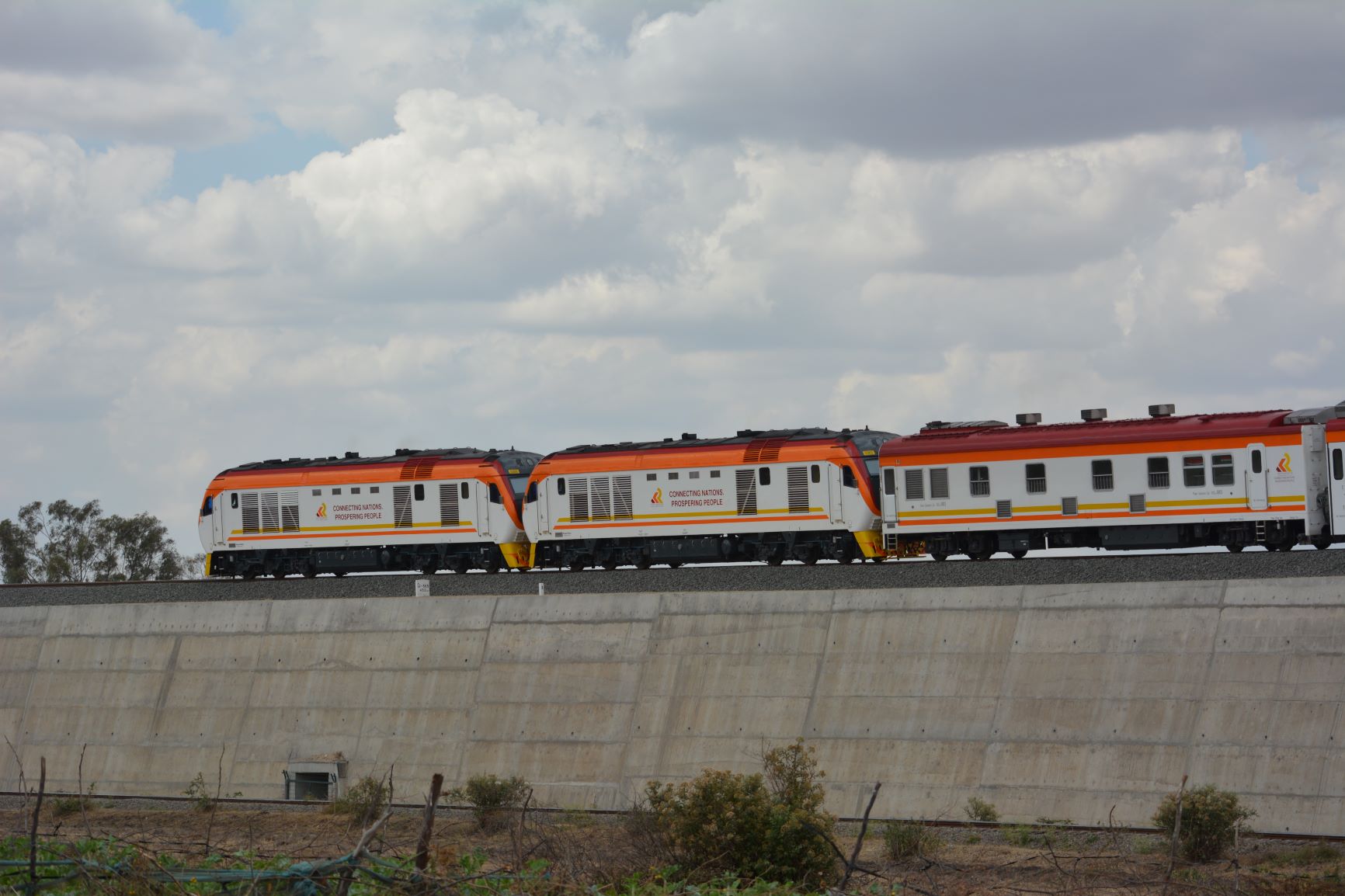
Kenya Railways Madaraka Express train running on the standard gauge railway
*Image source: Kenya Railways Corporation*
Use only the official booking routes
Kenya Railways names three official ways to buy Madaraka Express tickets: online through metickets.krc.co.ke, by dialling *639# on a Safaricom line, or in person at a Madaraka Express passenger service station. The conditions of carriage also warn travellers not to deal with people selling tickets through other routes.
That warning is useful for visitors because the train is popular and the route is familiar to resellers. If you are outside Kenya or do not have a Safaricom line, plan around the web portal or station counter rather than assuming the phone route will work for you. Keep the confirmation details, because the ticket and ID check matter later.
Make the ID details exact
The booking step is not just a formality. Kenya Railways says passengers must provide full names, valid identification documents, and a telephone number. Accepted documents include a Kenya ID, valid passport, military ID, diplomatic ID, Kenyan alien card, valid driving licence, or a Kenya Police Abstract valid for six months. For minors below 12 years, the conditions mention a birth certificate as proof of age.
At boarding, the same identification details must match the passenger details on the ticket. The rules say tickets are not transferable and that copies of identification documents are not accepted. For a visitor, the cleanest version is simple: book with the same passport details you will physically carry to the station.
Treat station arrival as part of the journey
The official conditions say passengers must arrive at the departure station at least one hour before departure. That time is not padding for a cafe stop. It is there for check-in, boarding, security screening, and luggage checks.
Do not plan this like a metro train where arriving at the platform a few minutes before departure is normal. If you are starting in Nairobi or Mombasa, add road traffic and station security to your timing. If you miss the train or board a train different from the one printed on your ticket, the conditions can treat you as travelling without the correct ticket.
Know the cancellation and rescheduling window
The standard rules are strict. Economy and First Class cancellations should be made at least 48 hours before the departure time on the ticket, and refunds are subject to a 30% fee. Rescheduling also needs to be done at least 48 hours before departure, carries a 10% fee, can be done only once, and depends on seat availability.
The conditions distinguish some Premium Class processing through the online platform, while Economy and First Class changes are handled over the counter at the nearest Madaraka Express passenger service station. The important planning point is the same for all travellers: if your safari, flight, or coast hotel date may move, do not wait until the travel morning to change the train.
Pack luggage you can actually carry
Kenya Railways defines luggage as personal effects such as suitcases and handbags, and says passengers are allowed to carry luggage that is easy for them to carry along. The same conditions describe train doors designed to accommodate luggage measuring 160 cm by 200 cm by 60 cm.
That does not mean every oversized holiday setup is a good idea. You still need to move through security, boarding areas, and the train with your own bags. Kenya Railways also states that it is not liable for loss or damage of passenger luggage, so keep documents, electronics, medication, and valuables under your own control.