Home/Editorial Guides/Kato Pafos Archaeological Park guide: hours, ticket, mosaics, and Tombs of the Kings
Travel Guide
Kato Pafos Archaeological Park guide: hours, ticket, mosaics, and Tombs of the Kings
Kato Pafos Archaeological Park is the practical Paphos stop for Roman mosaics, harbour-side ruins, and the Nea Pafos part of the UNESCO property.
ByMomentBook Editorial·Published·Updated
Kato Pafos Archaeological Park is the practical Paphos stop for Roman mosaics, harbour-side ruins, and the Nea Pafos part of the UNESCO property. The visit looks simple, but the season boundary and the separate Tombs of the Kings fee can change the plan.
This guide is based on the Cyprus Department of Antiquities page, the official Visit Cyprus portal, and the UNESCO Paphos listing. As of the 4 May 2026 check, the guide includes only opening hours, prices, closure days, and access notes, which you can recheck on the official pages.
What to know first
The Department of Antiquities lists winter hours for Nea Pafos, Kato Pafos as 16 September–15 April, daily 08:30–17:00.
Summer hours are 16 April–15 September, daily 08:30–19:30, and the Department page states that the last ticket is issued at 19:00.
Visit Cyprus lists the operating period as all year round, with closure on Christmas Day, New Year’s Day, and Greek Orthodox Easter Sunday.
Basic admission is €4.50, while Visit Cyprus lists Tombs of the Kings as an additional €2.50.
Organised groups of more than 10 persons receive a 20% reduction on entry fees.
Department of Antiquities special entry cards are €8.50 for one day, €17.00 for three days, and €25.00 for seven days.
Official access information says the site is partially accessible to wheelchairs.
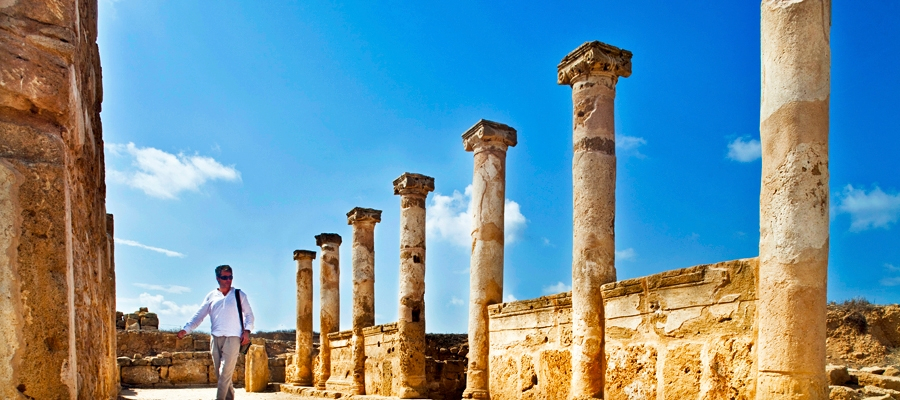
Ancient remains and visitor paths at the Archaeological Park of Kato Pafos
*Source: official Visit Cyprus tourism portal.*
Read the season boundary before you go
The summer season gives you a longer window, but it is still a large outdoor site. From 16 April to 15 September, the site runs to 19:30, with the last ticket issued at 19:00. Plan a late visit from that ticket cutoff, not just from the closing time.
From 16 September to 15 April, the site closes at 17:00. Cooler weather can make walking easier, but a late-afternoon arrival may leave too little time for the mosaic houses and the harbour-side monuments.
Separate the park ticket from Tombs of the Kings
The basic Kato Pafos Archaeological Park ticket is €4.50. Visit Cyprus lists Tombs of the Kings as an additional €2.50, so don’t assume the two stops are covered by one small ticket if you’re building a full Paphos archaeology day.
If you’re visiting several Department of Antiquities museums and monuments in Cyprus, the special entry card can be useful. The same official card system is valid for one day, three days, or seven days, but it allows only one visit to each museum or monument.
Put the mosaics first
Visit Cyprus describes the Houses of Dionysos, Theseus, Aion, and Orpheus as the core mosaic stops. The House of Dionysos alone has 556 square metres of floor mosaics with mythological, vintage, and hunting scenes.
UNESCO explains that Paphos includes remains of villas, palaces, theatres, fortresses, and tombs with exceptional architectural and historic value. For a short visit, start with the mosaic houses, then continue to the Odeon, Agora, and Saranta Kolones if time and heat allow.
Heat, walking, and accessibility
This is a broad outdoor archaeological site. In summer, the official hours are long, but exposed paths can make midday difficult. Carry water, sun protection, and a hat; early morning or late afternoon is usually the more realistic window.
Official access information says wheelchair access is partial. The Department page adds that visitors should follow staff directions, with marked special parking and marked rest rooms. If you need step-free routing, ask staff about the practical route before committing to the whole circuit.
When to recheck
Visit Cyprus notes that opening and closing times and entrance fees are subject to change without notice and advises visitors to check before visiting. Recheck the official pages on the morning of your visit around public holidays, Greek Orthodox Easter Sunday, and any local event period.