Kampala-Entebbe Expressway toll and airport transfer guide
This guide is for travelers moving by car between Entebbe International Airport and Kampala who need to decide whether to use the toll expressway, pay cash, or rely on an Upesi
ByMomentBook Editorial·Published
This guide is for travelers moving by car between Entebbe International Airport and Kampala who need to decide whether to use the toll expressway, pay cash, or rely on an Upesi electronic card. The main constraint is not complicated, but it is easy to miss: the toll depends on vehicle class and payment method, and the official FAQ does not treat mobile money or bank-card payment at the booth as the normal way to pay.
The Kampala-Entebbe Expressway is a four-lane toll expressway under Uganda's Ministry of Works & Transport, linking the airport with the capital. Whether you are using an airport taxi, hotel pickup, rental car, or multi-day hired driver, confirm the toll arrangement before departure so the airport run does not turn into a last-minute cash argument at the plaza.
What to know first
Official tolls are charged per one-way trip, not as a return ticket, and the trip connects the Busega, Kajjansi, and Mpala toll-plaza system.
The official cash toll for a Class 2 light vehicle is UGX 5,000. Larger vehicles pay more, up to UGX 18,000 for large goods vehicles with six or more axles.
At the booth, the practical choices are Uganda-shilling cash or a loaded Upesi electronic card.
Easy Pass gives a 10% per-trip discount; Weekly Pass covers 14 trips over any consecutive 7-day period; Monthly Pass covers 60 trips over any consecutive 30-day period.
The official FAQ says the expressway and toll plazas operate 24/7, including holidays.
Pedestrians, motorcycles below 400 cc, and animals are prohibited on the expressway unless signs indicate otherwise.
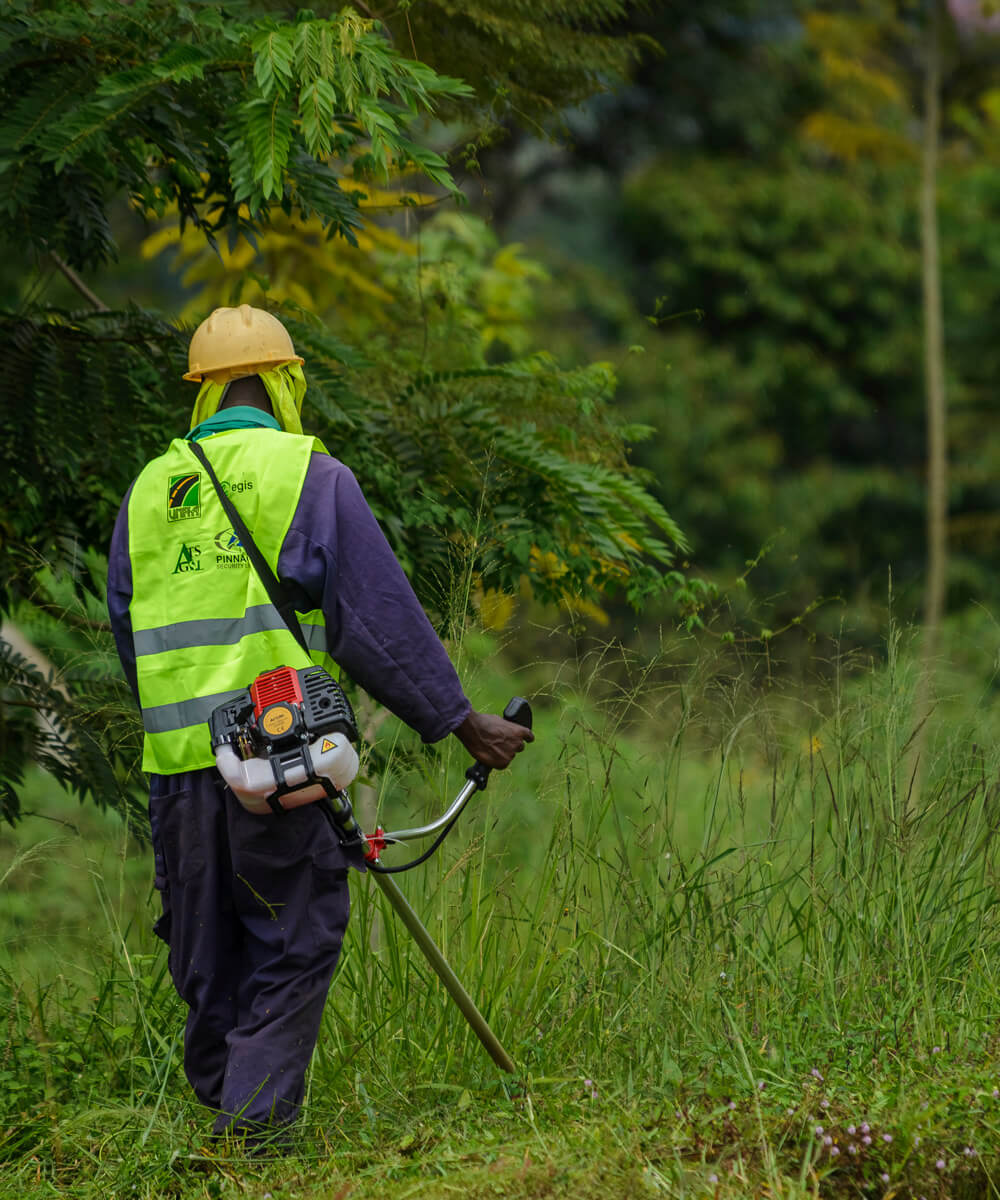
Lanes and green roadside scenery on the toll expressway between Kampala and Entebbe
Source: Image from the official Kampala-Entebbe Expressway website.
Choose between cash and an Upesi card
For most short-stay visitors, cash is the simplest choice. The official payment guidance tells road users to have the toll fee ready in Uganda shillings or to have an Upesi toll card with enough balance before reaching the plaza. The driver should slow to 20 km/h near the toll booth, stop, pay cash or tap the card, wait for the receipt when paying cash, and pass through after the boom opens.
If you book an airport taxi or hotel vehicle, ask whether the quoted fare includes the expressway toll. If it does not, keep the Class 2 amount ready in small Uganda-shilling notes. This avoids a common arrival problem: the passenger assumes the toll is included, while the driver expects the passenger to pay separately at the booth. A simple written note in the booking thread is enough.
An Upesi card makes more sense for repeat users. The official FAQ describes the electronic card as a prepaid smart card that is tapped at the reader so the appropriate toll is deducted. Cards are available at the Busega, Kajjansi, and Mpala toll stations or at designated points of sale. The first card is issued free, while a lost, damaged, or stolen card requires a UGX 20,000 replacement fee.
Do not choose a card only because the card itself is free. Easy Pass registration needs a user name supported by a national ID or driving permit and a phone number. Weekly and Monthly cards also require a vehicle number plate. A Regular or Easy Pass card can be used by multiple vehicles if it has enough credit, but a Frequent User card is tied to a particular number plate and is not transferable to another vehicle.
Understand the vehicle classes and discounts
The official toll table separates vehicles by class. Motorcycles above 400 cc are Class 1 and pay UGX 3,000. Light vehicles are Class 2 and pay UGX 5,000. Medium goods vehicles with two or three axles pay UGX 10,000. Large goods vehicles and buses with four or five axles pay UGX 15,000. Large goods vehicles with six or more axles pay UGX 18,000.
Most ordinary airport taxis and rental cars will be treated as Class 2, but travelers should not assume that every vehicle used by a group is Class 2. Vans, buses, trucks, and vehicles with unusual loads may be classified differently. If you are arranging a group transfer, a safari vehicle, or a work vehicle, ask the operator which toll class applies before you agree on the final price.
A “trip” is a one-way movement. The official note defines it as a single journey in one direction that starts from one of the three entry points on the expressway, Busega, Kajjansi, or Mpala, and ends at one of the three exit points, Kampala Northern Bypass/Busega, Kajjansi Roundabout, or Mpala Interchange. If you go from the airport area to Kampala and later return to the airport, plan for two toll payments.
The discount passes are useful only when the usage pattern fits. Easy Pass applies a 10% discount per trip. Weekly Pass consists of 14 trips valid for any consecutive 7-day period and is advertised at up to 50% discount. Monthly Pass consists of 60 trips valid for any consecutive 30-day period and is advertised at up to 70% discount. Loaded funds and trips are non-refundable, and the FAQ says funds or trips are forfeited after twelve consecutive months without use.
Plan the airport timing and exit points
The expressway exists to provide an efficient route between Entebbe and Kampala and to help decongest the metropolitan area. That does not mean it guarantees a fixed door-to-door travel time for every flight. On a departure day, allow for airline check-in, security, rain, traffic before and after the expressway, toll-plaza delay, and hotel pickup delays.
The official About page describes a 26.2 km expressway handover, including the 25 km tollway section from Busega to Mpala and 1.2 km along Munyonyo Spur Road. In practical terms, travelers should think about which end of the road they are using: the Entebbe and airport side near Mpala, the Kajjansi area, or the Kampala Northern Bypass/Busega side.
Your final address matters as much as the expressway itself. A hotel in central Kampala, Nakasero, Kololo, Bugolobi, Ntinda, Muyenga, or another district still requires ordinary city driving after the expressway exit. Ask the driver which exit they intend to use, whether the expressway is included in the route, and how much extra time they normally allow after leaving the toll road.
Late-night and early-morning trips are less about opening hours and more about payment readiness. The official FAQ says the road and toll plazas operate continuously, including holidays. Even so, a missing cash note, an empty card, or an unclear fare agreement can slow the trip at exactly the wrong moment. For a first visit, keep small Uganda-shilling notes or book a pickup with the toll included in writing.
Rules that change the ride
The expressway rules are stricter than a casual city-road transfer. U-turns, reversing, and parking or stopping outside emergencies are not permitted. When joining the expressway, drivers should signal early, wait for a safe gap, accelerate along the entry road, and merge at traffic speed. When leaving, they should watch for exit signs, move into the correct lane early, keep indicating, and reduce speed on the exit road.
The motorcycle rule matters for traveler choices. Pedestrians, motorcycles below 400 cc, and animals are prohibited unless signs say otherwise. If you were considering a boda-boda as a budget airport solution, do not treat the expressway as that route. For airport reliability, arrange a car, taxi, hotel transfer, or rental vehicle that can legally use the road.
Toll exemptions are narrow. The official FAQ lists the presidential convoy, ambulances, and fire brigade trucks as exempt, then states that no other categories are exempt. A hotel vehicle, tour vehicle, diplomatic-looking car, rental car, or airport pickup should not be expected to avoid the toll merely because it serves travelers.
The safety guidance also has direct consequences for self-drivers. The rules tell drivers to respect the speed limit, avoid phone use while driving, reduce speed during and after bad weather, avoid drink-driving, keep vehicles in good mechanical condition, keep left, use the right lane only for overtaking, and maintain a safe following distance of 60 metres. If you rent a car, these are not optional local suggestions.
If you are taking a taxi, rental car, or hired driver
For a taxi, the key question is whether the route and the toll are included in the fare. App rides, airport-counter taxis, hotel pickups, and private drivers may present this differently. The toll is charged to the vehicle at the plaza, so a passenger needs to know whether the driver will absorb it, add it to the fare, or ask for cash at the booth.
For a rental car, confirm the vehicle class, the payment method, and the emergency process. If you plan to use an Upesi card, check whether the rental company already has one linked to the vehicle or whether you are expected to pay cash. For a short rental, cash may be simpler than registering a card. For a long rental, a card may make sense if the vehicle remains the same.
For a multi-day hired driver, calculate the pass only when the vehicle and schedule are stable. Weekly and Monthly discounts can look attractive, but a Frequent User card is tied to a particular number plate. If the service changes cars, the expected savings may disappear. Agree who owns the card, who pays for unused trips, and what happens if the vehicle changes.
The official Services page lists 24-hour patrols, free incident response, fire truck support, ambulance support, and free towing. That support is useful, but it should not replace basic screening of the vehicle and driver. Before a long or late trip, keep the operator's emergency contacts, your driver's number, and the official toll-road contacts available.
Common mistakes
The first mistake is assuming that mobile money or a bank card can be used casually at the toll booth. The official FAQ says this causes delay and instead points users toward loading the electronic card through mobile-money and other channels. At the booth, have Uganda-shilling cash or a loaded Upesi card ready.
The second mistake is remembering only the UGX 5,000 Class 2 toll and applying it to every vehicle. Larger vehicles, buses, and goods vehicles can pay more. If your transfer vehicle is a van, bus, or work vehicle, ask about the toll class before the trip rather than disputing it at the plaza.
The third mistake is treating a discount pass like a flexible stored-value product. Weekly Pass is built around 14 trips in seven consecutive days, and Monthly Pass is built around 60 trips in thirty consecutive days. Loaded trips and funds are non-refundable, and long inactivity can cause forfeiture. Short visitors often cannot use enough trips to justify the pass.
The fourth mistake is confusing 24/7 toll-road operation with a safe airport schedule. The road can be open while your pickup is late, the city section is slow, the booth line is longer than expected, or the airline check-in counter is closing. Build the schedule around the flight, not around the road's operating hours alone.
Who should use which option
A first-time visitor making one airport-to-Kampala transfer should usually keep it simple: ask the driver to use the expressway if it makes sense, confirm whether the toll is included, and carry cash for a Class 2 toll if it is not. Repeat the same check for the return airport run.
A business traveler, NGO worker, resident, or long-stay visitor moving repeatedly between Entebbe and Kampala should consider the Upesi card. If the trips are predictable and the vehicle is stable, Weekly or Monthly may reduce the cost. If the schedule is uncertain or the vehicle changes often, cash or Easy Pass keeps more flexibility.
A self-driver should choose the expressway only with the road rules in mind. High-speed driving can make exit-road speeds feel slower than they are, and the official rules specifically warn drivers to check the speedometer when leaving. In rain, darkness, or unfamiliar traffic, allow more time instead of treating the toll road as a reason to rush.
A budget traveler should compare total cost, not only the toll. The ordinary road may be cheaper at some times, but the expressway may reduce delay, fuel use, stress, or missed-flight risk. Ask for both route prices when negotiating with a driver, then choose based on time pressure and luggage, not only on the cheapest number.
What to check before you go
Before departure, recheck the official Toll Fees page for current rates and card terms. Vehicle classes, discount tables, replacement fees, and dormant-balance rules are operational details that can change. A traveler buying a pass should verify the minimum load amount, validity period, and plate-linking rule on the day of purchase.
Put the toll arrangement in writing when booking an airport taxi or hotel pickup. A short message such as “expressway toll included in quoted fare” or “passenger pays toll separately” is enough. It prevents a small payment issue from becoming a stressful conversation when you are tired after a flight.
If paying cash, carry Uganda-shilling notes in usable denominations. If using a card, check that the Upesi card has enough balance and that a Weekly or Monthly card is linked to the correct vehicle. If there is a breakdown or accident, use the driver or rental company's contacts and the official expressway emergency contacts together.