The Greater Baths Day Pass and Trail Guide for Virgin Gorda
Use this guide if you are planning an independent, yacht, cruise, or island-hopping visit to The Baths on Virgin Gorda and need to decide how to buy entry, which route to follow,
ByMomentBook Editorial·Published
Use this guide if you are planning an independent, yacht, cruise, or island-hopping visit to The Baths on Virgin Gorda and need to decide how to buy entry, which route to follow, and when sea conditions should change the plan. The visit is not just a beach stop; the official ticket and walking pattern sit inside The Greater Baths, which links Devil’s Bay, The Baths, Stoney Bay, and Spring Bay National Parks.
The main constraints are the listed 9:00 a.m.-4:00 p.m. park hours for The Baths, a narrow and sometimes wet boulder passage, swim-line rules for sea arrivals, and the safety-flag system. A traveler who assumes boats can land directly on the sand, or that the boulder route is an easy path for every body type and mobility level, is likely to plan the day badly.
What to know first
The Greater Baths Day Pass is the official one-day entry product for Devil’s Bay, The Baths, Stoney Bay, and Spring Bay National Parks.
The official online ticket page shows US$3.00 for the pass plus a US$0.08 service fee.
The Baths and Devil’s Bay park pages list visitor fees of US$3.00 for adults and US$2.00 for children.
The Baths park page lists opening hours as 9:00 a.m.-4:00 p.m.; recheck the hours, ticket page, weather, and flags on the day you go.
Land visitors follow a one-way pattern from the upper car park to Devil’s Bay, through the boulders to The Baths beach, and back up to the car park.
Sea visitors are dropped at the swim line at Devil’s Bay, swim ashore, walk through the boulders to The Baths beach, and swim back out to the swim line for pickup.
Red flag means no mooring or swimming, purple warns of dangerous marine life, and yellow means use caution.
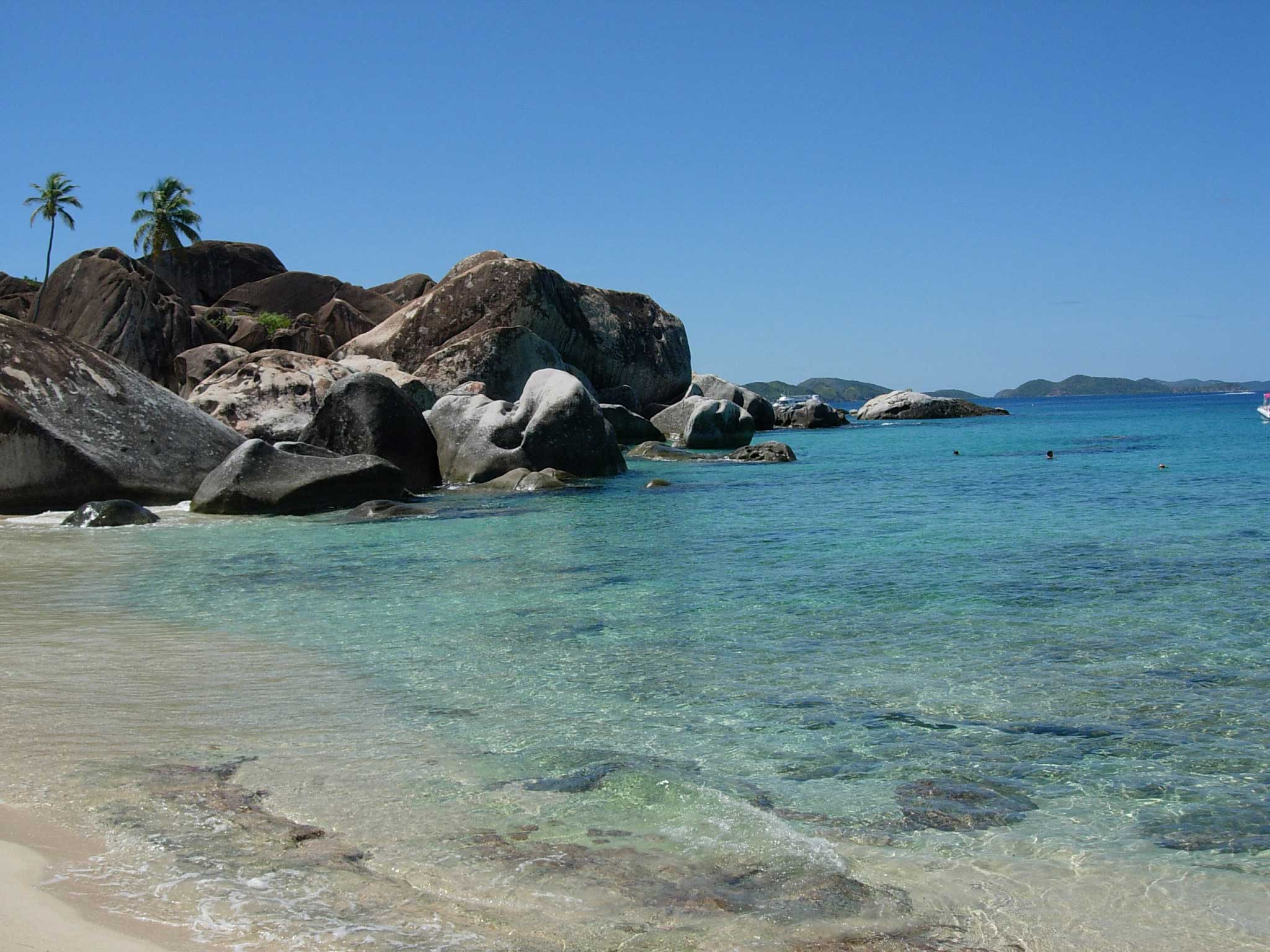
Granite boulders and beach passage at The Baths on Virgin Gorda
Source: Official image from the National Parks Trust of the Virgin Islands.
Choose the pass before arranging transport
For most short visits, start with The Greater Baths Day Pass rather than treating The Baths as a free-form beach stop. The National Parks Trust ticket page says the pass gives one-day access to The Greater Baths, including Devil’s Bay, The Baths, Stoney Bay, and Spring Bay National Parks. The online ticket display shows a US$3.00 price plus a US$0.08 service fee, while the individual park pages list visitor fees of US$3.00 for adults and US$2.00 for children.
Those numbers are small, but they still matter because the entry check is part of the visitor-management system. The Government of the Virgin Islands says residents, citizens, and belongers who want free entry must show a valid BVI driver’s licence or NHI Member ID. Without that proof, the US$3.00 fee can be charged, and entering without paying the relevant fee can trigger enforcement. Visitors should plan to buy or verify entry instead of assuming a beach path is informal.
Do not lock ferry, taxi, charter, or cruise-excursion logistics before you understand the park rules. Transport prices and schedules vary by operator, and this guide does not treat them as official park facts. Build the day around the official pass, the listed hours, the one-way trail, and the flag system, then choose transport that leaves enough margin for entry, walking, swimming, and a slow return.
Follow the land route in the official order
If you arrive by road, taxi, or tour vehicle, the official one-way system changes the natural instinct to walk straight to The Baths beach. The National Parks Trust explains that visitors arriving from the parking lot at the top should walk first to Devil’s Bay, spend time there, proceed through the boulders to The Baths beach, and then hike back up to the parking lot.
That order is useful for crowd flow and for pacing. Devil’s Bay works well as the softer start: you can cool off, adjust footwear, and decide whether everyone in the group is comfortable before the boulder passage. The crossing between Devil’s Bay and The Baths is the part that can involve steps, rope handrails, small spaces, wading, bending, crawling, ladders, and slippery surfaces. It is short compared with a full hike, but it is not a flat boardwalk.
Pack as if your hands need to be free. Water shoes or secure sandals, a small dry bag, and a phone pouch are more useful than a large beach tote. Avoid rolling luggage, loose flip-flops, and anything you would not want to drag through damp rock gaps. If children are coming, describe the route as a supervised boulder passage rather than a simple beach walk so expectations match the actual terrain.
Plan sea access around the swim line
Sea access can look more flexible than road access, but the rules are tighter. The official route for visitors arriving from the sea is to be dropped at the swim line at Devil’s Bay, swim to shore, enjoy the beach, walk through the boulders to The Baths beach, then swim back out to the swim line for pickup. Dinghies are not allowed to access the beach, and the swim line separates swimmers from the mooring field.
If you are using a private boat, bareboat charter, or small-boat excursion, ask how the operator handles the marine permit, where the drop and pickup happen, and what the fallback is if flags change. The National Parks Trust states that marine access requires a moorings permit and that no overnight mooring is permitted. Its park-entry page also notes that marine conservation permits may take up to five business days to process after the required application is received.
The sea route is not the best choice for every traveler. You need enough swimming confidence to move between the vessel and shore, and you need to be comfortable doing that while protecting a phone, towel, or small bag. Non-swimmers, anxious swimmers, and families with small children should verify whether the operator offers an alternative or should choose land access instead.
Read the flags and winter-swell warnings
The safety flags are decision signals, not decoration. A red flag means no mooring or swimming, so sea access should stop rather than become a negotiation. A purple flag warns of dangerous marine life such as jellyfish. A yellow flag means conditions require caution. If a flag, staff instruction, or operator message conflicts with your original plan, the flag and local instruction should win.
Winter swells are a separate reason to keep the day flexible. The National Parks Trust warns that strong ocean swells can occur in the winter months, preventing use of the mooring buoys and access to the beach from the sea. During those periods, swimming is not permitted because of strong currents. A boat itinerary that looks simple on paper can therefore fail on the water.
Land access is not automatically problem-free on rough days either. Wet rock, crowding, and hurried groups make the passage harder. If you arrive and the conditions feel beyond the weakest person in your group, it is better to shorten the visit, stay on the easier beach area, or come back under calmer conditions than to push through the boulders for a photo.
Avoid the common mistakes
The first mistake is treating The Baths as a single beach with a single entry point. The official ticket covers The Greater Baths, and the practical route links Devil’s Bay and The Baths through a controlled boulder passage. If your map, taxi plan, or tour description skips Devil’s Bay entirely, check whether it matches the current one-way system.
The second mistake is compressing the schedule because the admission fee is small. Entry, walking down, swimming, changing footwear, moving through the rocks, waiting for slower groups, taking photos, and climbing back to the car park can all take more time than expected. A tight ferry or cruise return can turn a manageable route into a rushed and slippery one.
The third mistake is ignoring the difference between beach rules and boat rules. Boats cannot simply nose onto the sand, dinghies are not permitted to access the beach, and the swim line is part of the safety design. If your group has weak swimmers, heavy camera gear, or children who need hands-on supervision, confirm the sea-access sequence before you pay for the excursion.
Match the visit to the right traveler
The visit works best for travelers who can walk uneven ground, handle a short wet boulder passage, and accept that the route is controlled by flags and sea conditions. It is especially practical if you are already staying on Virgin Gorda, have a full island day, or can give the park a flexible half day rather than treating it as a quick photo stop.
It is less suitable as a rushed add-on for people with knee, hip, or back problems; anyone uncomfortable with tight spaces; travelers carrying large bags; or sea visitors who are not comfortable swimming from a boat to shore. Those travelers may still enjoy part of the area, but they should not promise themselves the full Devil’s Bay-to-The Baths passage without checking conditions.
Cruise and day-trip visitors should choose transport that leaves slack on both sides of the park visit. A low entry fee does not make the logistics low-risk. The decisive variables are the official hours, the queue and walking pace, the flag color, the sea state, and whether everyone in the group can safely follow the required route.
Check these items before you go
Before departure, recheck the official National Parks Trust pages for the current ticket price, service fee, child fee, opening hours, and any access notice. If you are buying online, confirm the checkout total and save proof of purchase in a place you can access offline. If you are relying on a local free-entry category, bring the required BVI ID rather than assuming verbal confirmation will be enough.
For sea access, confirm the marine permit, swim-line drop, pickup location, flag status, winter swell risk, and what happens if swimming is closed. For land access, confirm the taxi or parking plan, the one-way order through Devil’s Bay and The Baths, footwear, water, dry storage, and return timing.
The facts in this guide were checked against official sources on 2026-06-08. Fees, online service charges, opening hours, permit processing, flag status, and local ID rules can change, so the final decision should always follow the National Parks Trust, the Government of the Virgin Islands, and your on-site instructions.