Copán Archaeological Park Ticket, Tunnel, and Museum Guide
This guide is for travelers planning a practical visit to Parque Arqueológico de Copán in Copán Ruinas, Honduras.
ByMomentBook Editorial·Published
This guide is for travelers planning a practical visit to Parque Arqueológico de Copán in Copán Ruinas, Honduras. The main decision is not only when to go, but whether the base archaeological park ticket is enough, whether the tunnels or sculpture museum justify extra time, and whether a school-group free-entry rule actually applies to your trip.
The constraint is that Copán prices and access rules are split by visitor category and by site area. I checked the official IHAH, UNESCO, and Honduras tourism sources on 2026-06-02. Use the official tariff images and current IHAH notices again before you pay, because fees, exchange handling, ticket office practice, and special access can change.
What to know first
IHAH publishes separate official tariff graphics for Honduran visitors, Central American visitors, and visitors from the rest of the Americas and other continents.
The Honduran general ticket is shown as L100 and includes the archaeological park, Las Sepulturas, and Museo de Escultura. The tunnels are shown separately at L50.
The Central American graphic shows the park and Las Sepulturas at US$10, the tunnels at US$15, and the sculpture museum at US$5.
The graphic for visitors from the rest of the Americas and other continents shows the park and Las Sepulturas at US$20, the tunnels at US$15, and the sculpture museum at US$10.
The last-Thursday student courtesy applies only to properly identified students and only to the main site, Las Sepulturas, the sculpture museum, and the regional archaeology museum.
That student courtesy does not apply to the tunnels, Rastrojón, or the digital museum, and teachers, adults, and companions pay the category that applies to them.
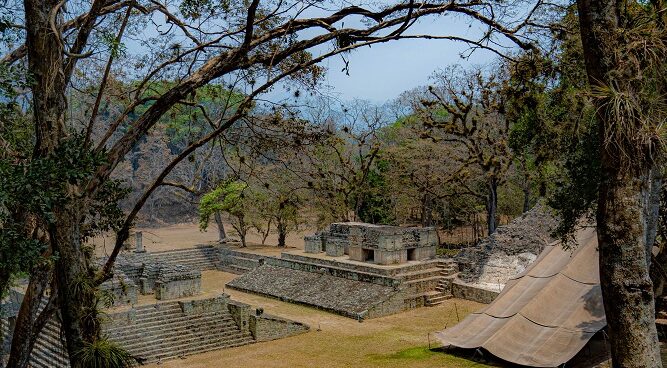
Stone structures and trees at the Copán Acropolis in an official IHAH site photo
Source: official IHAH image for Parque Arqueológico Copán.
Choose the right ticket before you queue
Copán looks like one archaeological destination, but your budget depends on who you are and which areas you plan to enter. IHAH's official tariff graphics, embedded on the Copán page in 2026, separate Honduran visitors, Central American visitors, and visitors from the rest of the Americas and other continents. That split matters more than the old single-price summaries still found on travel forums.
For Honduran visitors, the official graphic shows the general L100 entry as covering the archaeological park, Las Sepulturas, and Museo de Escultura. The tunnels are a separate L50 item. The same graphic also shows identified students from national schools, colleges, and universities, children under six, older-adult categories, pensioners, people with disabilities, and a fourth-age category. Bring the document that proves the category rather than assuming the cashier can apply it without evidence.
For Central American visitors, the graphic shows the park and Las Sepulturas at US$10, the tunnels at US$15, and the sculpture museum at US$5. For visitors from the rest of the Americas and other continents, it shows the park and Las Sepulturas at US$20, the tunnels at US$15, and the sculpture museum at US$10. The graphic also says values are handled in lempiras according to the exchange rate, so carry enough local currency or confirm payment options before you commit to several add-ons.
Decide which areas are worth your time
A first-time visit should start with the main archaeological park, Las Sepulturas, and the sculpture museum as one planning unit. IHAH explains Copán through relief sculpture, carved altars, three-dimensional stone sculpture, architecture, and the Hieroglyphic Stairway. UNESCO lists the Maya Site of Copan as World Heritage since 1980 and highlights the citadel, public squares, and the development stages of the city before its early tenth-century abandonment.
The main park gives you the plazas, stelae, Acropolis, and the Hieroglyphic Stairway on Structure 10L-26. The sculpture museum helps you slow down after the outdoor route and look at the forms, copies, and preserved pieces with less pressure from sun, crowds, or group movement. Las Sepulturas gives the visit a residential and daily-life context, which is useful if you want the city to feel like more than a ceremonial core.
The tunnels are a separate decision. They are best for travelers who actively want the underground conservation and construction story, not for people who only want one extra photo stop. If you are short on time, tired, traveling with someone who dislikes enclosed spaces, or already trying to fit the museum and Las Sepulturas into a half day, do not treat the tunnels as automatic. Ask the ticket office how access is running that day and then decide.
Use the student courtesy only when it really applies
The IHAH form for free entry on the last Thursday of each month is not a casual discount for any student who happens to arrive. It is a request form for an educational visit. It asks for the school name, the person responsible, telephone, email, address, activity description, visit date, arrival time, and number of students. It also says students must carry their complete uniform and student card throughout the stay.
The courtesy applies only to correctly identified students. It is limited to the main site, Las Sepulturas, Museo de Escultura, and Museo Regional de Arqueología Maya. The same document states that the courtesy does not apply to Los Túneles, Rastrojón, or Museo Digital. If a school itinerary includes those areas, the organizer needs a separate budget and should not promise a fully free visit.
Adults, teachers, and companions also need to pay according to their category. For a group leader, the practical sequence is clear: submit the form, wait for approval, prepare names and documents, keep the free areas and paid areas separate in the schedule, and give parents or chaperones a real price estimate. A group that skips those steps can lose time at the entrance and create awkward payment surprises.
Treat photo and video rules as conservation rules
IHAH's photography and video authorization form is aimed at organized photography or filming, but it is also useful because it shows how the site expects visitors to behave around protected heritage. Authorized crews must report to the IHAH regional representative on arrival, receive instructions about allowed areas, and accept staff or security presence when required. The site is not treated as a free backdrop.
The restrictions are specific. The document does not allow drones. It does not allow speakers, megaphones, or other devices that generate loud sound. It does not allow fires that may create smoke or damage the ground. It also says not to use the monument for dances or other activity that places movement or weight on it. Filming must not affect other visitors' enjoyment or cause negative impacts on fauna around the park.
The form uses working hours of 8:00 a.m. to 4:00 p.m. for filming. Do not use that single form as a full public-hours guarantee, but do use it as a warning not to plan late formal filming unless IHAH confirms it. If your trip involves commercial content, a documentary, a brand shoot, a drone idea, or a large group with equipment, solve the permission question before you buy normal visitor tickets.
Plan a route that does not rush the meaning
The best pacing is to start in the main park, orient yourself around the plazas and stelae, then move toward the Acropolis and the Hieroglyphic Stairway. IHAH emphasizes the stairway as a key part of Copán's universal value because of the long Maya hieroglyphic inscription on Structure 10L-26. Seeing it too quickly, without understanding why the city is famous for sculpture and writing, makes the visit feel like a list of stones.
After the outdoor circuit, the sculpture museum is the strongest add-on for many visitors. It gives you a chance to compare forms, notice carving detail, and connect the outdoor monuments with the artistic language IHAH describes. Las Sepulturas then adds a different rhythm: instead of another grand monument, it helps you think about residence, movement, and the wider valley context.
If you add the tunnels, put them in the plan from the beginning. Tunnel access can affect the pace, and it may depend on staff guidance, current conservation conditions, or same-day ticketing practice. If you arrive late in the day, prioritize the main park and museum first. A rushed tunnel visit at the cost of missing the sculpture museum is not always the better decision.
Avoid the mistakes that cost time or money
The first mistake is treating one ticket as an all-access pass. The official graphics separate the core park and Las Sepulturas, the tunnels, and the sculpture museum by category. The free-student document separates the main educational courtesy from paid areas even more clearly. Write down the areas you actually want before you reach the window.
The second mistake is building a budget from old travel posts. IHAH now has official tariff images on its own site, including graphics dated to 2026 uploads. Use those first, then confirm how dollar-denominated values are converted into lempiras. If you are traveling as a Central American visitor, do not assume you fall into the same category as visitors from other continents.
The third mistake is treating Copán as a stage set. The rules against drones, loud equipment, fires, movement on monuments, and visitor disruption are not small-print bureaucracy. They are part of protecting the same heritage that makes the site worth visiting. Stay behind barriers, do not climb or lean on stones for photos, and let the staff's direction override your shot list.
Match the option to your travel style
Choose the base park, Las Sepulturas, and sculpture museum if this is your first visit, you want the clearest heritage story, or you have limited time. This option covers the UNESCO value, IHAH's emphasis on sculpture and architecture, and the difference between the ceremonial core and surrounding areas without pushing everyone into a longer add-on.
Add the tunnels if you are specifically interested in archaeology below the visible surface and can handle enclosed spaces. It is a meaningful choice for travelers who have already budgeted the extra fee and time. It is less suitable if you are traveling with young children, someone with mobility concerns, or a group that tends to slow down at museums and viewpoints.
Use the last-Thursday student courtesy only for an organized educational group that can meet the form's requirements. Use the filming authorization route if the visit involves a production crew, formal photography, or any plan that could affect other visitors. Do not plan a drone sequence, a sound-heavy shoot, or a performance on the ruins, because the official rules point the other way.
Recheck these items before you go
The day before your visit, reopen the IHAH Copán page and look at the current Honduran and foreign-visitor tariff graphics. Confirm the park and Las Sepulturas price, the tunnel price, and the sculpture museum price for your category. If the page has changed or the image date has changed, use the newest official source rather than this guide's checked price examples.
Check opening hours, ticket-office cutoff, guide availability, payment methods, exchange handling, weather, footwear, and transport timing from Copán Ruinas town. If you plan to use the student courtesy, confirm approval and documents before arrival. If you plan to film, read the authorization form and remove drones, loud equipment, fires, and monument-contact scenes from the plan.
Finally, read the UNESCO and IHAH context before entering the site. Copán is not only a photo stop with carved stones. It is a protected World Heritage property where the city plan, stelae, altars, sculpture, stairway inscription, museum pieces, and residential areas explain each other. The better you separate the ticket choices, the easier it is to give the place enough time.