2026 Airport Process Guide for International Trips: From Check-In to Boarding
For many travelers, the most stressful part of an international trip is not the flight itself but the airport routine.
ByMomentBook Editorial·Published·Updated
For many travelers, the most stressful part of an international trip is not the flight itself but the airport routine. In 2026, the airport process is still manageable if you think of it as a sequence: documents, check-in, security, immigration, gate, arrival. The goal is not to memorize every airport detail. It is to keep your passport, boarding information, carry-on essentials, and screening items organized in one predictable flow.
What to know first
Check the official source again before payment or departure.
Keep tickets, identity documents, and screenshots together.
Use the strictest time, closure, or access rule as the anchor for the day.
The flow to remember first
Before leaving home, confirm passport validity, visa or ETA needs, boarding details, and your route to the airport.
At the airport, handle check-in, bag drop, and baggage tags first.
Then move through security screening, departure immigration, and gate confirmation.
After landing, think in this order: immigration, baggage claim, customs, and transport into the city.
Keep liquids, medicine, batteries, and electronics easy to reach so the checkpoint moves faster.
Wide interior view of an international airport terminal
*Wikimedia Commons · S23678 · CC BY-SA 3.0*
1. What to prepare before you leave for the airport
Airport processing feels like it starts at the terminal, but in reality a large part of it is decided at home. If you already checked your booking reference, passport validity, entry requirements, and baggage rules, the airport becomes a confirmation step instead of a problem-solving session.
Confirm passport, visa, ETA, and any entry documents you may need
Check whether your airline has online or app check-in available
Review checked-bag size and weight limits
Confirm the airport terminal and travel time to get there
Save your hotel address, first-day arrival plan, and emergency contacts
Keep the original passport on you. Keep booking confirmations and key travel details available offline too, in case airport Wi-Fi or roaming is weak when you need to show something quickly.
2. Check-in and bag drop
At the airline counter or self-service kiosk, the main jobs are boarding pass issuance and baggage handling. This is the point where it helps to clearly separate what stays with you from what gets checked.
Keep passport and booking details easy to present
Confirm your seat, number of checked bags, and final bag destination tag
Recheck bag weight before sending it away
Make sure medicine, electronics, power banks, and important documents are not inside checked baggage
Keep the baggage receipt until you collect your bag at the destination
Check-in cutoffs and bag-drop deadlines vary by airline, so extra time matters. One of the most common airport mistakes is arriving late and discovering there is no room to fix a baggage or document issue.
3. How to move through security more smoothly
At security, preparation matters more than speed. The easier it is to show ID, separate liquids, explain medication, and present electronics, the easier the screening usually becomes.
Keep passport or ID ready to show
Place liquids in a small separate pouch
Check whether large electronics need to be removed at your airport
Make sure phones and other devices can power on if requested
Keep medically necessary liquids or medicine ready to declare if needed
A cluttered bag often leads to slower screening. Food, cables, batteries, and liquids packed together can trigger extra checks because they block a clear X-ray image.
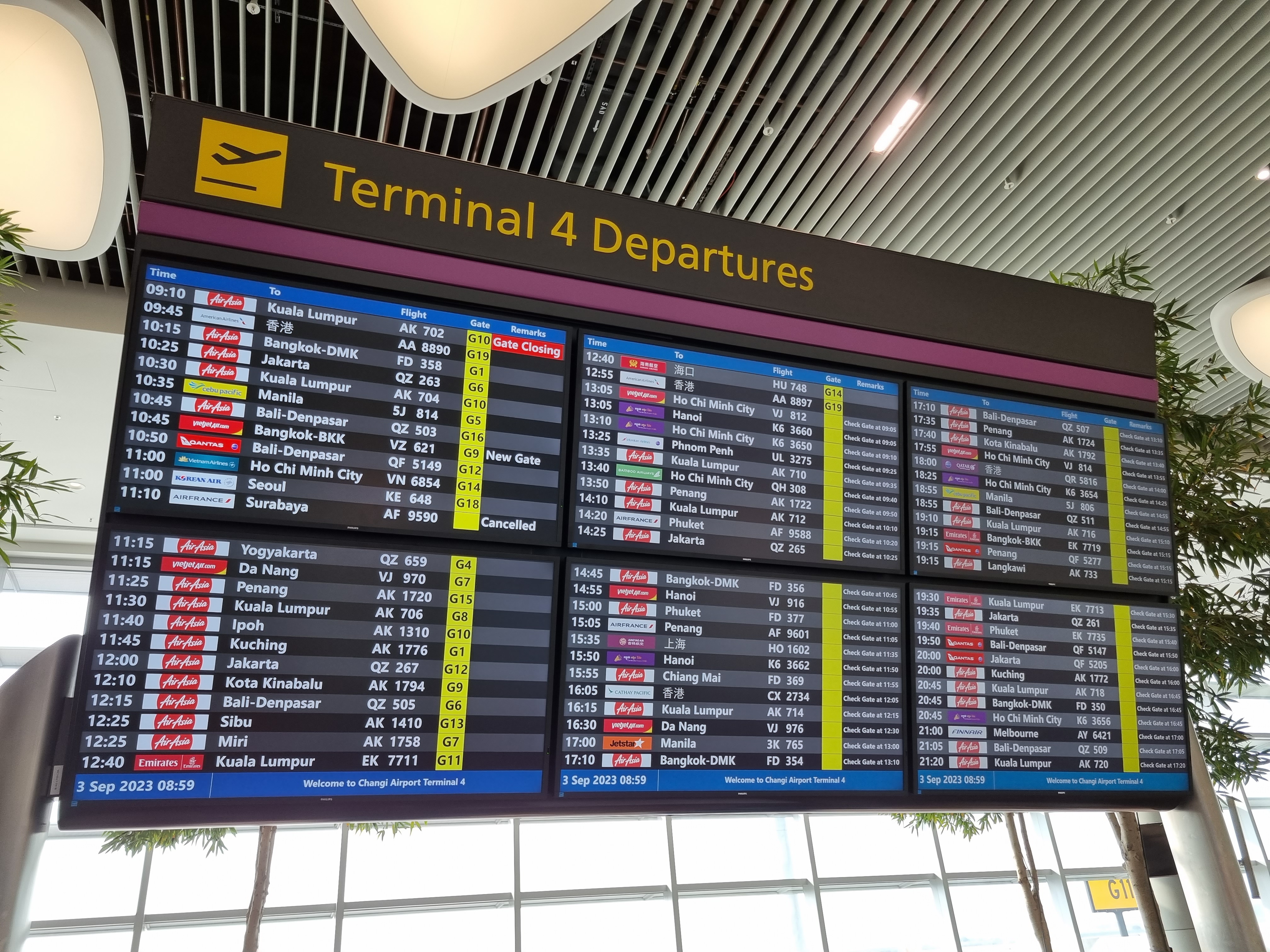
Airport departure information display
*Wikimedia Commons · Jun Jie Yam · CC BY 4.0*
4. After security: immigration, gate checks, and boarding
Passing security is not the end of the airport process. You still need to clear departure immigration where applicable, confirm your gate, and stay aware of timing changes. In this phase, the useful habit is to finish the next small task before you relax.
Recheck the gate number and look for updates after immigration
Use this time for water, restrooms, and a quick meal
Do duty-free shopping only after you know your gate and boarding time
Separate boarding start time from final boarding cutoff time
Put passport, phone, and boarding pass back in the same easy-access pocket
A gate can look close on the map and still take longer than expected to reach. In large airports and transit hubs, changes happen often enough that both the app and the airport screens are worth checking.
5. Plan the arrival sequence before you land
On arrival, the usual order is immigration, baggage claim, customs, and transport onward. One reason travelers feel rushed on departure day is that they have not planned the first hour after landing. Once that hour is clear, the whole day feels easier.
Before immigration, have your hotel address and onward or return flight details ready
Find your baggage carousel and collect checked luggage
Know whether you need to declare anything at customs
Decide your first and second transport options into the city
Check data access, maps, and accommodation contact details after arrival
Immigration questions are often short, but you should be ready to answer where you are staying, how long you are staying, and when you are leaving.
Copy-and-go airport process checklist
Before departure: passport, visa or ETA, check-in, airport route, baggage rules
Check-in: boarding pass, seat, bag tags, baggage receipt
After departure control: gate recheck, water and restroom, final boarding time
After arrival: immigration, baggage claim, customs, city transport
Airport routines become easier when they are repeatable. Once you have one solid flow, every future trip becomes less tiring before the plane even takes off.